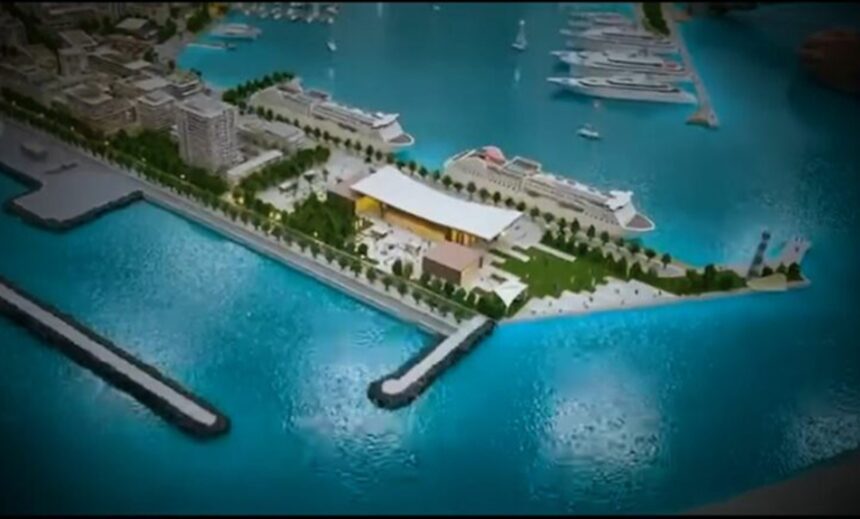
The story of the transformation of the Port of Durrës into a luxury yacht marina dates back to the early years of the Socialist government’s first mandate in Albania. On November 25, 2015, the Albanian government approved an agreement with the United Arab Emirates on the promotion and protection of investments. Article 3, paragraph 1 of the agreement outlined the commitment of both parties to create favorable conditions for investors and facilitate investments within their respective territories.
In 2020, the Albanian Parliament ratified the agreement on economic cooperation between the Council of Ministers of Albania and the Government of the United Arab Emirates. Article 6 of that agreement identified several “strategic projects,” including the redevelopment of the Port of Durrës, tourism investments in Vlora, Saranda and Ksamil, as well as tourism projects in Përmet.
The agreement also explicitly stated that these strategic contracts and projects would not be subject to public procurement procedures, public tenders, or competitive bidding processes under Albanian law. At the time, the opposition challenged the deal before the Constitutional Court, but the court upheld the agreement as lawful.
In 2021, the Albanian Investment Development Agency, signed by Prime Minister Edi Rama, granted “strategic investor” status to the “Durrës Yachts & Marina” project. The project was presented as an integrated luxury tourism development spanning approximately 79 hectares within the Port of Durrës area, to be developed in two phases by Symphony Real Estate Development sh.p.k.
The plan envisioned a luxury marina, elite residential structures, high-end residences and tourism services. By December 2021, the Albanian government transferred 80.9 hectares of port land to the Ministry of Finance so it could later be handed over to the investor.
In July 2022, the Committee for Strategic Investments extended the strategic investor status from seven to fifteen years. The same year, Parliament approved the framework agreement between the Albanian government and Eagle Hills Real Estate Development, Albanian Seaports Development Company, and NSHMI Development LLC for the “Durrës Marina & Yachts” project.
One of the most controversial parts of the deal appears in Article 2 of the agreement, where the Albanian state not only transferred public property to businessman Mohamed Alabbar, but also exempted the project from infrastructure impact taxes and social housing contributions. According to the law, the value of these waived obligations would count as part of the Albanian state’s contribution to the investment.
The explanatory report accompanying the agreement failed to clearly define the exact financial benefit Albania would receive from the deal. Instead, it vaguely claimed the state would benefit from participation in the investment while preserving its shareholding rights.
The total projected cost of the marina project was officially estimated at €2.08 billion, divided into two phases. However, according to financial data referenced in the report, only around €43 million had been invested during the first two years. Based on those figures, critics argue the full completion of the marina could take decades — potentially 50 to 70 years — raising serious doubts about whether buyers who prepaid apartments will ever fully enjoy the promised luxury development within a reasonable timeframe.
The Constitutional Court’s own documents reveal that the Albanian state could ultimately bear costs exceeding hundreds of millions of euros. According to calculations cited in court documents:
- Public land transferred to the project was valued at approximately €124 million;
- The broader land value was estimated at nearly €400 million;
- Forgiven infrastructure taxes amounted to around €84 million;
- Social housing obligations reached approximately €58.5 million;
- Environmental cleanup costs were estimated at €25 million;
- Additional financing obligations added millions more.
In total, the state’s contribution to the project was estimated at nearly €300 million, excluding the enormous value of the transferred public property itself.
The Port Authority of Durrës attempted to justify the transfer by claiming that 20% of the developed land would eventually become public space for the city of Durrës. It also argued that the maritime infrastructure, including docks and the basin, would remain state property.
Another controversial revelation emerged during Constitutional Court proceedings: the widely advertised “€2 billion investment” may not represent direct cash investment at all. Court documents suggest the valuation also includes assets, intellectual property, securities, loans, and other financial instruments connected to the investor’s broader corporate structure.
Critics argue this allows the investor to inflate the project’s declared value without injecting equivalent real capital into the development itself.
Despite these concerns, in February 2025 the Constitutional Court rejected the opposition’s request to annul the agreement. However, two judges issued partially dissenting opinions.
Judge Marsida Xhaferllari argued that Parliament’s approval of individual administrative contracts through legislation distorted Albania’s constitutional legal order. According to her opinion, laws of this type lose the characteristics of normative acts and instead become instruments tailored for specific private interests.
Judge Ilir Toska went even further, arguing that several articles of the agreement were unconstitutional because Parliament improperly intervened in what should have remained an executive contractual process.
According to the dissenting opinions, the approval process effectively shielded the agreement from ordinary judicial review and weakened institutional safeguards designed to protect public interest and state assets.
Today, critics claim the only clear winner so far has been Mohamed Alabbar himself.
They argue the Emirati businessman secured control over Albania’s largest and most strategic port area, public land estimated at more than half a billion euros, massive tax exemptions, and millions in apartment pre-sales revenue — all while the actual capital initially invested by the company reportedly amounted to just €23,000 in founding capital for “Durrës Marina.”
Meanwhile, thousands of buyers who prepaid luxury apartments in the future marina are still left wondering when — or if — the ambitious mega-project will ever truly be completed.