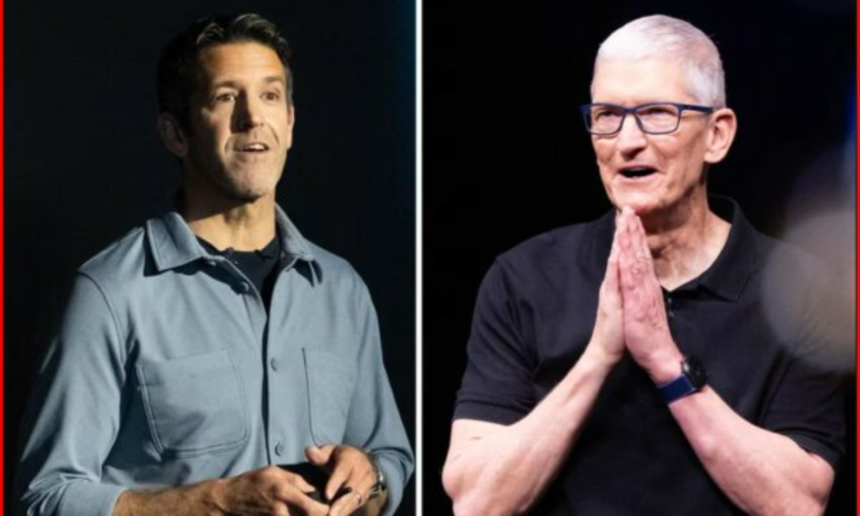
Apple has announced that Tim Cook will step down as Chief Executive Officer after nearly 15 years leading the company, handing over the role to hardware engineering chief John Ternus.
The transition will take effect on September 1, with Cook remaining at Apple as Executive Chairman.
“It has been the greatest privilege of my life to serve as Apple’s CEO and to lead such an extraordinary company. I love Apple with all my being,” Cook said in the official statement.
Cook, 65, took over leadership of Apple in 2011 following co-founder Steve Jobs. Known for his expertise in supply chain management and global operations, he oversaw Apple’s massive international expansion and strengthened its core products, especially the iPhone. However, he has often been viewed more as a strategic operator than a visionary figure in the mold of Jobs.
Under Cook’s leadership, Apple experienced remarkable financial growth, deeply embedding its technology into everyday life. The company reported one of its strongest iPhone sales quarters this year, driven largely by high demand in China. Annual profits have surpassed $100 billion, while Apple’s market value has surged from around $350 billion to over $4 trillion.
During his tenure, Apple launched products such as the Apple Watch and AirPods, along with digital services like Apple Music and Apple TV+. He also became known for navigating complex global political and economic environments, maintaining supply chain stability in key markets like the United States and China.
His successor, John Ternus, 50, has long been considered a leading candidate for the CEO role. He has been with Apple since 2001 and played a key role in developing the company’s hardware products. In his statement, Ternus said: “I am honored to take on this responsibility and will lead with the values and vision that have defined this company for more than half a century.”
Cook described Ternus as “an engineer at heart and an innovator in spirit.”
However, Apple now faces a new set of challenges. The company is under pressure in the race for artificial intelligence, where it has lagged behind some competitors and has often relied on third-party solutions for its assistant Siri. Meanwhile, newer products like Apple Vision Pro have yet to generate strong market demand.