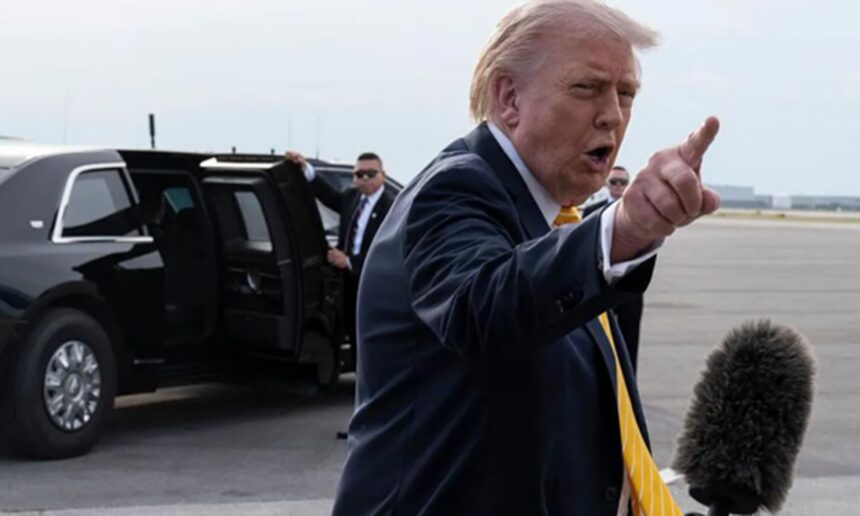
U.S. President Donald Trump delivered a stark ultimatum to Israeli Prime Minister Benjamin Netanyahu, warning that Israel could find itself geopolitically isolated if it continues to escalate its direct military conflict with Iran.
In an interview with journalist Barak Ravid of Israel’s Channel 12, Trump revealed that Washington was left completely in the dark until the final moments before Israel’s recent overnight missile strikes against Iranian targets. He claimed that frantic, last-minute U.S. intervention successfully managed to limit the scope of the bombardment.
The Late-Night Ultimatum and Netanyahu’s Defiance
The high-stakes diplomatic friction peaked during a tense phone call on Sunday evening, June 7, 2026. According to Trump, he explicitly ordered Netanyahu to absorb Iran’s recent ballistic missile salvos and refrain from launching a counter-offensive.
[The U.S.-Israel Communications Breakdown]
1. Regional Mediation: 5 Middle Eastern nations beg Trump to restrain Israel.
2. Trump Orders Restraint: Asks Netanyahu to halt retaliatory strikes to save diplomatic talks.
3. The Notification Gap: Israel informs Washington of strikes only AFTER missiles are airborne.
4. Trump Intervenes: U.S. successfully pressures Israel to narrow the target list mid-flight.
5. Netanyahu's Pivot: Immediately after the call, Netanyahu coordinates targets with Marco Rubio.
White House aides who witnessed the call told Channel 12 that Trump believed he had successfully bought a few days of restraint to facilitate back-channel negotiations between Washington and Tehran.
However, immediately after hanging up with the U.S. President, Netanyahu convened an emergency war cabinet meeting with top Israeli defense officials. Following the session, Netanyahu contacted U.S. Secretary of State Marco Rubio to notify him that Israel would defy the directive and go ahead with targeted strikes inside Iranian territory.
Trump told the network that the formal notification arrived entirely too late:
“Israel informed Washington about the attacks very late, after the missiles were already on their way to Iran. We managed to limit the scope of the attack.”
Regional Pressure and Iran’s Back-Channel Appeal
The urgent push for American deterrence comes as five unspecified Middle Eastern nations involved in mediating between Washington and Tehran begged Trump to restrain Netanyahu to preserve a regional ceasefire architecture.
By Monday morning, June 8, 2026, the diplomatic channels shifted rapidly:
- Tehran’s Proposal: Top Iranian officials contacted Washington directly, offering a complete cessation of missile strikes against Israel, on the strict condition that Israel halts further retaliatory actions.
- The Second Call: Armed with Iran’s conditional offer, Trump phoned Netanyahu a second time, reportedly convincing the Israeli Premier to agree to a temporary halt on subsequent waves of bombardment.
Trump Insists an Iran Deal is “Days Away”
Despite the direct exchange of military blows between Israel and Iran, President Trump maintained his signature optimism regarding a comprehensive diplomatic breakthrough with the Islamic Republic.
He reiterated to Channel 12 his long-standing belief that a grand bargain with Iran is not only highly beneficial but actively sought after by the leadership in Tehran.
“A deal with Iran remains possible and beneficial, and Tehran wants to sign such an agreement,” Trump insisted, echoing a claim he has made for several weeks. “A deal is just days away.”
Whether Trump’s aggressive transactional diplomacy can permanently defuse the direct military confrontation remains uncertain, especially as Netanyahu continues to demonstrate a willingness to bypass the White House to execute high-risk military operations.