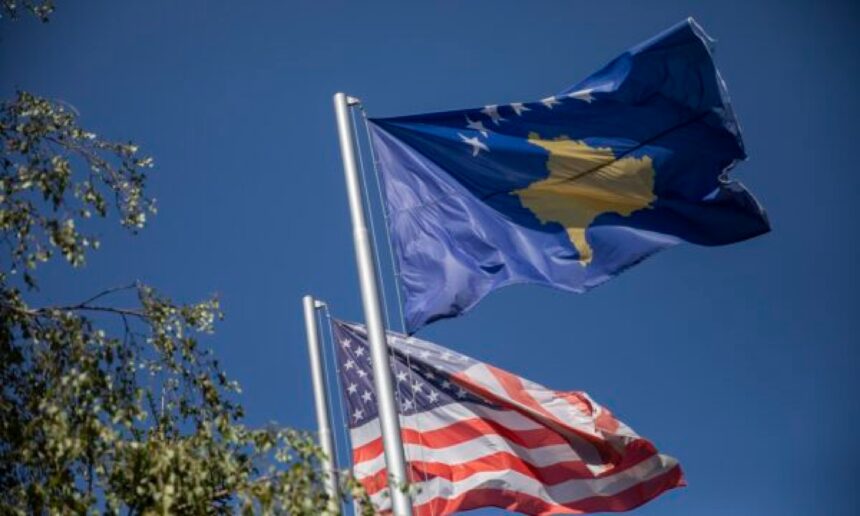
The United States is entering a new phase of policy in the Western Balkans, moving away from its earlier model of direct state-building and intervention, and instead focusing on stability, strategic partnerships, and shared economic interests. This is outlined in the latest report by the U.S. Department of State submitted to Congress on American policy in the region.
Kosovo remains at the center of this strategic recalibration, continuing to be treated as a key partner in the regional security architecture. The report emphasizes that U.S. forces remain engaged through NATO’s KFOR mission, which is described as essential for maintaining stability and ensuring freedom of movement in Kosovo.
Washington also reaffirms its support for the transformation of the Kosovo Security Force (KSF) into a professional, multi-ethnic territorial defense force.
The document stresses that the U.S. will continue encouraging Kosovo and Serbia to move forward in the normalization process, with the goal of reaching a sustainable and mutually acceptable agreement.
In a notable shift in policy language, the report states that “the era of U.S.-led nation-building has ended,” signaling a transition from direct intervention to more selective engagement driven by strategic interests.
According to the report, Washington now aims to empower local actors to take primary responsibility for addressing their own challenges, while the U.S. will intervene only where its involvement is necessary for core national interests.
The Western Balkans is described as remaining strategically important for the United States, both in terms of security and economic interests, including investments in energy, infrastructure, and trade.
A major focus is also placed on countering Russian and Chinese influence, which the report describes as actors attempting to exploit corruption and instability to expand their geopolitical and economic reach in the region.
Regarding Bosnia and Herzegovina, the U.S. reaffirms its commitment to the Dayton Peace Agreement and the country’s sovereignty and territorial integrity, calling for the avoidance of destabilizing actions.
The report also highlights continued military cooperation with NATO allies in the region, including Albania, Montenegro, and North Macedonia, while noting that security cooperation with Serbia will continue “in ways that advance U.S. interests.”
Economically, the United States aims to expand the presence of American companies in the Western Balkans, focusing on energy, infrastructure, and strategic development projects. This includes liquefied natural gas (LNG), nuclear energy, and renewable energy sources as alternatives to Russian gas dependency.
Key regional projects mentioned include gas infrastructure links such as the Southern Gas Corridor extensions, Serbia–North Macedonia interconnectors, hydropower development, and broader energy integration with European markets.
The report concludes that U.S. programs in the region—including military training, peacekeeping operations, and demining efforts—will continue, but with a stronger emphasis on measurable outcomes and direct U.S. strategic interests.