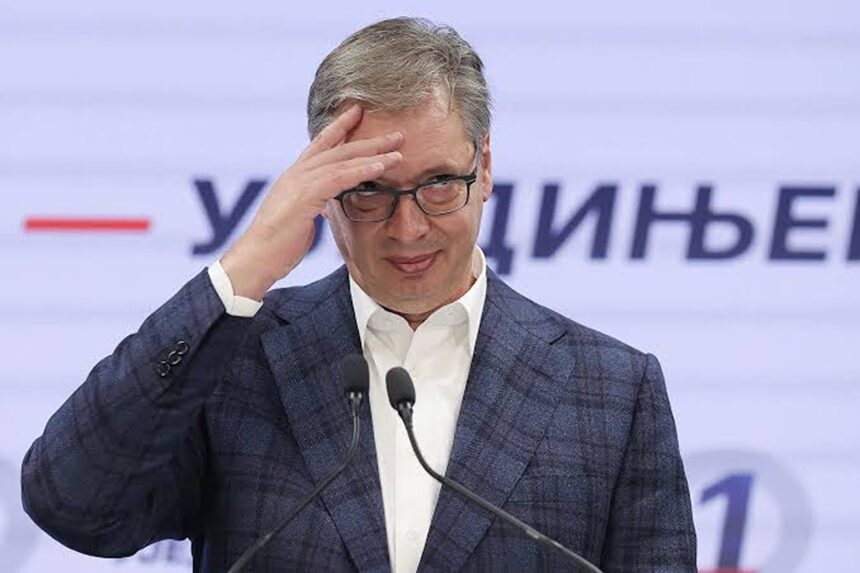
Aleksandar Vučić used his presidential power to pardon 49 people on September 27, the same day he resigned to make way for his party’s participation in the parliamentary elections. But the identities of those who received his clemency raise serious questions about whom Vučić chose to protect and why.
An investigation by Serbian investigative outlet KRIK revealed that several beneficiaries had faced criminal proceedings involving alleged obstruction of investigations, money laundering, bribery and violence against students and protesters. Among them was Dijana Hrkalović, former State Secretary at Serbia’s Ministry of Internal Affairs, who had been prosecuted for allegedly influencing police colleagues to obstruct investigations and destroy or withhold evidence. Although she initially received a one-year-and-four-month prison sentence, the verdict was overturned on appeal and the trial restarted. Vučić pardoned her.
He also pardoned individuals connected to violent incidents during student protests. Marko Pavlović, who hit student Sonja Ponjavić with his car during a protest in Belgrade, was among those granted clemency. Gorski Matović, accused of assaulting students during a protest in Novi Sad and previously convicted of violent behaviour, was also pardoned.
The list included former Niš High Court president Dragana Živadinović, who had been arrested on suspicion of accepting a hotel voucher in exchange for a decision on the conditional release of prisoners. It also included individuals facing proceedings related to money laundering, as well as four people tried in the so-called “Porsche” case following a confrontation with protesters in Novi Sad. Dr Igor Elez, an orthopaedic specialist arrested in 2020 on suspicion of accepting bribes, was also among those pardoned.
Vučić additionally pardoned 12 activists from Novi Sad who had been prosecuted over allegations of attempting to overthrow the constitutional order.
The question is unavoidable: why did Vučić use his presidential powers to grant clemency to so many people facing criminal proceedings, including individuals accused of obstructing investigations and people linked to violence against students? Why were these decisions not made transparent to the public before the elections?
This is not a minor administrative matter. Presidential pardons carry enormous responsibility. When they benefit people involved in cases concerning corruption, alleged abuse of public office, obstruction of justice and violence against protesters, the public has every right to demand explanations.
Vučić repeatedly presented himself as the defender of law and order while his government faced growing protests demanding accountability. Yet, through these pardons, he extended clemency to people whose cases raised serious questions about the very institutions he claimed to protect.
A president who speaks about law and order cannot avoid answering for the people he chooses to pardon. Vučić pardoned 49 people, including individuals facing serious criminal proceedings. The Serbian public deserves to know why, on whose behalf and what interests these decisions served.