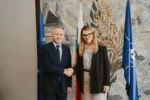
As political pressure mounts and his legitimacy weakens, Serbian President Aleksandar Vučić appears increasingly desperate to secure his political and personal future. Observers suggest he may attempt to follow Milorad Dodik’s path — seeking a private arrangement with Donald Trump to protect his interests once he leaves power.
However, analysts agree: Vučić’s chances of achieving that are slim.
A Leader Running Out of Options
According to political analysts, arrangements of this kind are made while one still holds power. With his term set to expire in 2027, Vučić faces growing unrest at home and a declining international reputation. Unlike Dodik, who retained influence within Republika Srpska despite Western sanctions, Vučić is losing control over his political narrative — both domestically and abroad.
Diplomatic sources note that Vučić’s history of aligning with the Democrats — the Clintons, Obama, and Biden — has left him distrusted by Trump’s Republican circle. Trump, known for holding grudges, is unlikely to forget Vučić’s political miscalculations and shifting loyalties.
The Dodik Example: A “Brother” Turned Model
Speculation in Belgrade suggests that Dodik’s alleged deal with the U.S. — possibly involving lifting sanctions in exchange for cooperation on lithium and Bosnia’s NATO trajectory — has inspired Vučić. But experts warn that Serbia lacks both the geopolitical leverage and the credibility to replicate such an agreement.
“Vučić has little to offer Trump. He’s already given up Kosovo, lost influence in the region, and alienated key international partners,” said political analyst Srećko Đukić. “He’s trying to secure safety for himself before his time runs out — but the Americans know exactly who they’re dealing with.”
An Eroding Negotiating Position
Former ambassador Mihajlo Brkić highlights that Vučić’s political position is far weaker than Dodik’s.
“Vučić’s regime is delegitimized at home. Unlike Dodik, who at least enjoyed a measure of local support during crises, Vučić faces a growing opposition movement and a disillusioned public,” he explained.
Brkić also underlined that Trump respects loyalty above all else — something Vučić has never demonstrated. “Dodik publicly backed Trump from the start. Vučić, on the other hand, supported Hillary Clinton in 2016 and Kamala Harris in 2024. Those are things Trump doesn’t forget.”
A Habit of Betrayal
Analyst Dragomir Anđelković drew a sharper contrast:
“Dodik keeps his word. Vučić tries to cheat everyone. He thinks he’s playing a game of thrones, but in reality, he’s just a pawn on someone else’s board.”
Anđelković adds that Trump’s team is well-informed about Vučić’s inconsistencies. “They saw how he stalled the real estate deal with Trump’s son-in-law Jared Kushner — and only tried to fix it after Trump returned to power. That kind of behavior makes him toxic in Washington.”
Between Fear and Survival
Political veteran Milovan Božinović suggests Vučić’s ultimate concern is personal safety once he leaves office. “Every authoritarian fears what comes after power — prison or exile. Vučić is no different. He’s searching for a safe landing, but few trust him anymore.”
Conclusion: Vučić’s Illusion of Control
As Serbia’s internal crisis deepens, Vučić’s maneuvering room on the international stage is shrinking. His desperate attempts to curry favor with Washington or Moscow reflect a leader cornered by his own contradictions.
Whether Trump would even entertain a deal with Vučić remains doubtful. Unlike Dodik, who built a consistent — albeit controversial — relationship with Trump’s circle, Vučić’s record is one of opportunism and betrayal.
In the words of one analyst:
“When you play both sides for too long, eventually, neither side trusts you.”