The Bujan Conference began on 31 December 1943 and concluded on 2 January 1944. During this conference, a resolution was signed recognizing Kosovo’s right to self-determination, including the right to secession, and affirming the will of the Albanian people of Kosovo to unite with Albania.
The Bujan Conference was convened as a reaffirmation of the new circumstances created after the Mukje Meeting, and as a direct response to the exclusion of Kosovo and other Albanian-inhabited territories under the former Kingdom of Serbs, Croats, and Slovenes. Specifically, it opposed the decisions of the Second AVNOJ Session in Jajce (29–30 November 1943), which failed to recognize Kosovo as an independent political subject, as it had previously been represented through Montenegro within the Anti-Fascist Council of Yugoslavia.
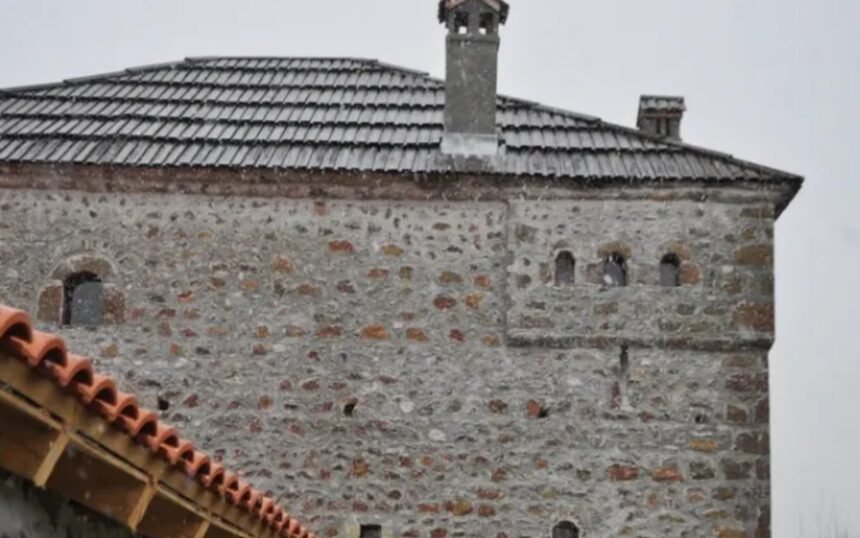
Bujan served as a meeting place for representatives of two nationalities—Albanians and Serbs—who sought an agreement to prevent further interethnic conflicts. The conference was held in the tower-house of Sali Mani, the Bajraktar of Krasniqe, located near the base of the Main Headquarters of the National Liberation Army of Kosovo and the Regional Committee for Kosovo and the Dukagjini Plain. A total of 49 delegates participated, representing all regions and social strata of Kosovo.
Among the participants were communists, nationalists, democratic patriots, representatives of the armed forces, youth, and women of the anti-fascist movement. The delegates represented the political forces aligned with the National Liberation Anti-Fascist Front of Kosovo.
Over the course of three days, the conference examined the key issues arising from the struggle against the occupiers. It elected a nine-member presidium, composed of:
- Mehmet Hoxha (Chairman), former Prefect of Elbasan
- Rifat Berisha (Vice-Chairman)
- Pavle Jovićević (Vice-Chairman)
- Xheladin Hana (Member)
- Fadil Hoxha (Member)
- Hajdar Dushi (Member)
- Zekeria Rexha (Member)
- Milan Zeçari (Member)
- Ali Shukriu (Member)
The Bujan Conference adopted a final resolution, which stated:
Kosovo and the Dukagjini Plain are regions inhabited predominantly by the Albanian people, who, as always and especially today, wish to unite with Albania.
As Hajdar Dushi explained, this position was based on the official declarations of the Communist Party of Yugoslavia and the Anti-Fascist Council of National Liberation of Yugoslavia, which recognized the principle of self-determination of peoples up to secession, a fundamental principle of the Atlantic Charter, solemnly proclaimed by the Allied powers.
The resolution further emphasized that joint struggle with the other peoples of Yugoslavia against the Nazi occupier and its collaborators was the only path to liberation, through which all peoples—including the Albanian people—would be able to determine their own fate, exercising the right to self-determination up to separation. This process was guaranteed by the National Liberation Army of Yugoslavia and the National Liberation Army of Albania, with which it was closely connected, as well as by the major Allied powers: the Soviet Union, Great Britain, and the United States (Atlantic Charter, Moscow and Tehran Conferences).
The resolution reiterated that Kosovo and the Dukagjini Plain are predominantly inhabited by Albanians who have consistently sought unification with Albania, and that the only path to achieving this goal was common struggle alongside the other peoples of Yugoslavia.
In 1946, Yugoslav leader Josip Broz Tito told the American news agency Associated Press that Kosovo and other Albanian territories would be returned to Albania. Tito reportedly made similar promises to Enver Hoxha, stating that Kosovo and other Albanian-majority territories within Yugoslavia would become part of Albania.
The Serbian newspaper Pravda later wrote that Tito had come close to “handing over” Kosovo and Metohija, as well as other Albanian territories. Tito was quoted as saying:
“If the communists come to power in Albania, Kosovo could fall under the jurisdiction of Tirana.”
According to Pravda, Enver Hoxha consistently claimed that Tito promised in June 1946 to transfer Kosovo and other Albanian-majority territories to Albania, though these statements were largely dismissed due to strained relations between Tirana and Belgrade.
According to some accounts, Tito’s close associate Edvard Kardelj even told Joseph Stalin during a visit to Moscow that Kosovo would be given to Albania as a result of their joint struggle against the occupiers and their collaborators.