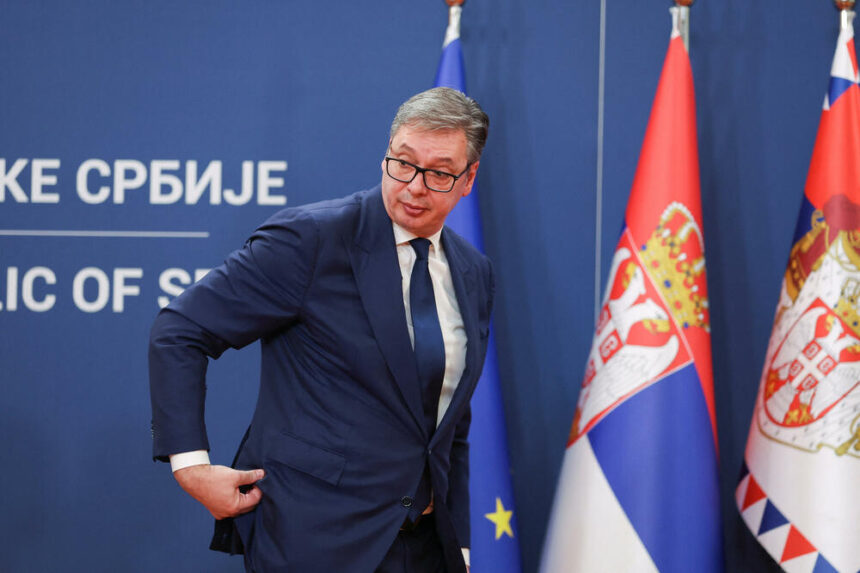
Political analysts say the rule of Aleksandar Vučić increasingly resembles “sieve politics”—just as one crisis is patched up, another immediately appears. Because of this, his promise that elections will be held later this year is being viewed with growing skepticism, amid mounting protests and dissatisfaction across different sectors of society.
Farmers Halt Road Blockades After Weeks of Protest
The latest development came as farmers across Serbia ended weeks of road blockades that began on February 11. Although negotiations with the government continue, farmers decided to suspend the protests due to obligations on their farms.
One of the representatives, Predrag Veljković, stressed that ending the blockades does not mean giving up on their demands, which include:
- Halting imports of agricultural products that threaten the domestic market until local stocks are sold.
- Introducing quotas and tariffs on milk and meat imports.
- Increasing the purchase price of milk for domestic producers.
Despite farmers insisting their protests were not politically motivated, analysts note that the demonstrations are part of a broader wave of public dissatisfaction with government policies.
A Chain Reaction of Protests
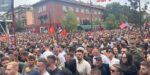
Over the past year, hundreds of thousands of citizens have taken to the streets, demanding accountability and reforms.
Among those protesting are:
- Students, who launched large demonstrations following the collapse of a canopy in Novi Sad that killed 16 people.
- Teachers, professors, doctors, judges, prosecutors, lawyers, and farmers.
According to observers, the government’s response has often involved force or short-term crisis management, but these tactics have failed to address the underlying causes of unrest.
“Sieve Politics”: One Crisis After Another
Political scientist Boban Stojanović says the farmers’ protests show that the ruling Serbian Progressive Party (SNS) has not stabilized the political situation.
He notes that farmers are a particularly influential social group:
“These are the people who feed the country. It directly affects Vučić’s target voters in rural areas, who can’t simply watch this and say everything is great.”
Stojanović also believes Serbia may not actually be heading into an election year, despite repeated announcements by Vučić.
Elections Depend on Poll Ratings
Another analyst, Dejan Bursać, argues that the government did not expect so many simultaneous crises, each revealing dissatisfaction across multiple sectors of society.
He added that the ruling party bases its decision about elections largely on polling numbers:
- If the ratings guarantee victory, elections could be called immediately.
- If support is uncertain, elections are postponed.
According to Bursać, the SNS currently lacks a comfortable polling advantage, which may explain the hesitation to set a firm election date.
Growing Pressure on the Government
While President Vučić has repeatedly suggested that elections could take place between October and December, analysts believe the political climate remains too unstable for the government to risk an early vote.
With protests emerging in sector after sector, critics say the administration is caught in a cycle of constantly extinguishing political “fires,” only for new ones to erupt elsewhere.