The recent visit of Mark Rutte, Secretary General of NATO, to the United States highlighted a growing paradox within the alliance: increasing military strength alongside deepening political fragility.
Speaking at the Reagan Institute, Rutte projected a message of pragmatism rather than crisis, portraying NATO as an alliance in transition. He emphasized rising European defense spending and a shift toward a more balanced transatlantic partnership, suggesting that years of U.S. pressure—particularly under Donald Trump—are yielding results.
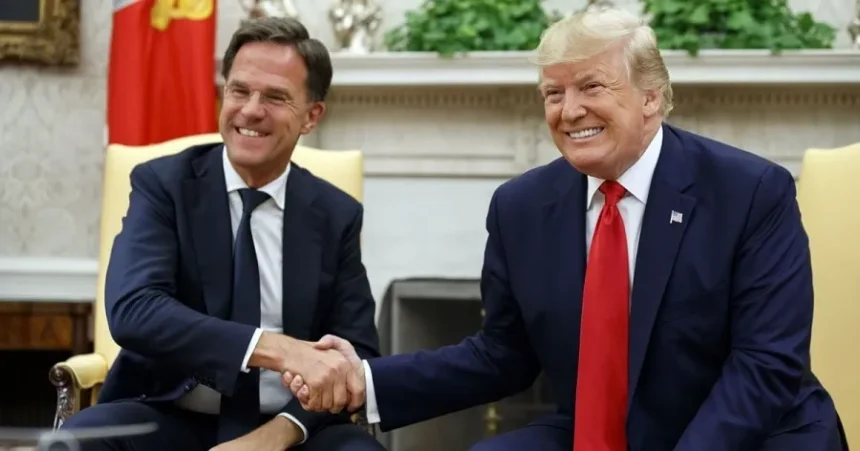
However, underlying tensions were difficult to ignore. Rutte’s meeting with Trump at the White House was described as “open and candid,” yet the absence of a joint public appearance signaled a lack of unified messaging. Trump’s continued criticism of NATO as unreliable has kept transatlantic relations strained.
Divisions were further exposed over Iran, where several European allies showed hesitation in backing U.S. initiatives, citing insufficient prior consultation. The refusal by Spain to allow the use of its airspace for certain U.S. operations underscored the gap between political alignment and operational cooperation.
Experts warn that while NATO remains militarily robust, it faces a gradual erosion of political cohesion. The issue is no longer just about burden-sharing, but about trust, predictability, and how allies interpret often conflicting signals from Washington.
Meanwhile, lawmakers in the United States Congress have reaffirmed strong bipartisan support for NATO, positioning it as a cornerstone of global security.
Rutte’s visit did not resolve transatlantic divisions, but it clarified them: a stronger NATO in capability, yet one still struggling to maintain political unity in an increasingly complex global landscape.