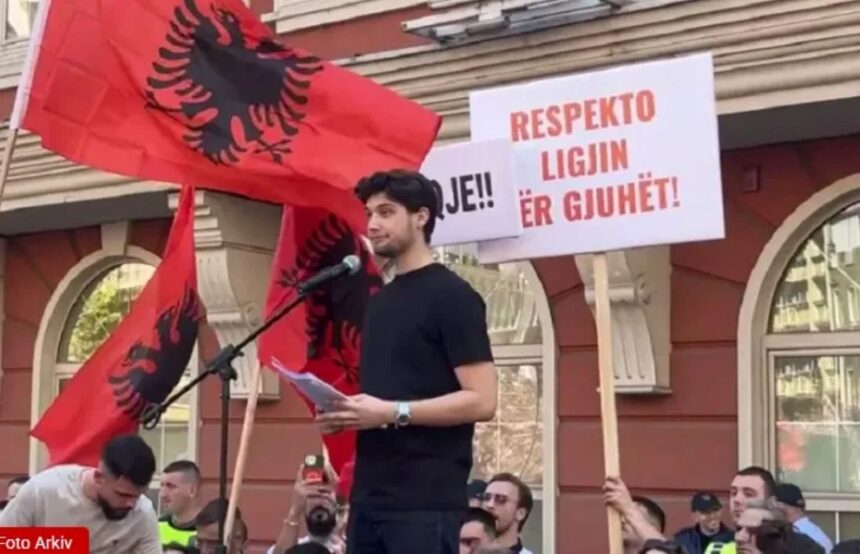
Prominent Albanologists gathered in Pristina have voiced their strong solidarity with ethnic Albanian student protests in Skopje, characterizing the demonstrations as a legitimate struggle for fundamental linguistic and institutional equality in North Macedonia.
The expressions of solidarity took place during the “Week of Albanian Language Studies” held in Pristina, where academics from across the region gathered to discuss linguistic rights and cultural heritage. The scholars weighed in on the ongoing unrest in North Macedonia, where Albanian students are demanding the legal right to sit for the state bar exam (jurisprudence exam) in their native language.
Academics Condemn Government Pushback against Equality
Professor Asllan Hamiti, a leading Albanologist from the “Ss. Cyril and Methodius” University in Skopje, stated during the seminar that the students’ demands are fully legitimate under existing framework agreements. Hamiti accused the current administration in Skopje of actively attempting to roll back linguistic equality.
“The students must be supported until the Albanian language is officially accepted for this exam,” Hamiti declared. He further characterized the political friction as a deliberate effort by the central government to obstruct constitutional language parity between Macedonian and Albanian.
Adding to the discussion, Professor Xhafer Beqiraj from the “Ukshin Hoti” University in Prizren expressed skepticism regarding the political will of the ruling elite in North Macedonia.
“Macedonian political structures are repeatedly demonstrating that they are not ready to accept Albanian as an equal language within the state framework,” Beqiraj remarked, emphasizing that local leaders and student bodies must remain steadfast in their insistence on total linguistic equality.
A Long-Standing Grievance
The current wave of protests is part of a series of demonstrations organized by Albanian law graduates and student organizations in Skopje. The long-standing grievance has caused significant friction within North Macedonia’s ruling coalition, as institutional delays continue to prevent Albanian-language speakers from entering the judicial system on equal footing.