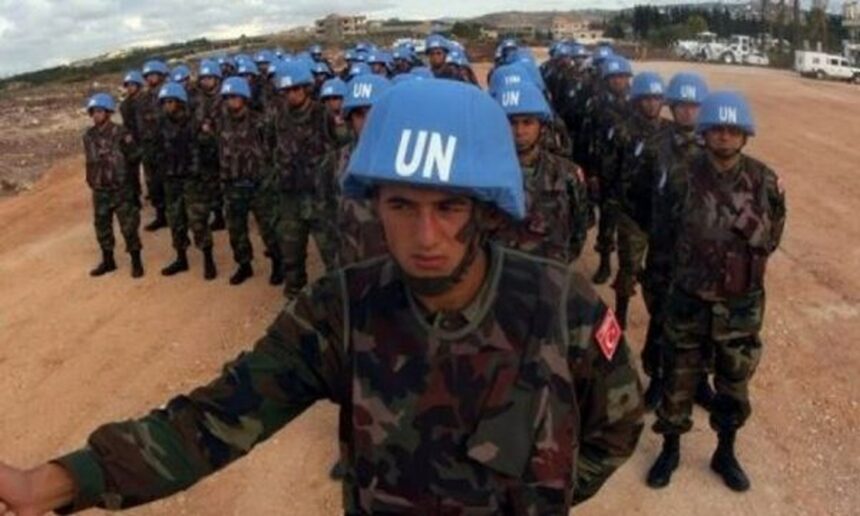
International peacekeeping missions are facing serious challenges due to declining troop contributions, funding shortages, and geopolitical deadlocks, researchers have warned.
According to a report published today by the Stockholm International Peace Research Institute (SIPRI), the number of United Nations peacekeepers and personnel deployed in similar operations fell in 2025 to its lowest level in at least 25 years.
At the end of December, 78,633 personnel were deployed in international peace operations worldwide, a 49% decrease compared to a decade ago.
During the past year, 58 international peacekeeping missions were active across 34 countries or territories, three fewer than in 2024.
“If this trend continues, we could see a dramatic weakening of multilateral conflict management and an almost complete marginalization of institutions such as the United Nations,” said Jair van der Lijn, Director of the Peace Operations and Conflict Management Programme at SIPRI.
He described the decline as the result of a “perfect storm” of financial, political, and geopolitical factors.
One of the main causes is a funding shortfall of around $2 billion faced by UN peacekeeping operations in 2025. According to the report, several donor countries failed to meet their financial obligations on time or in full, forcing the UN to significantly reduce personnel levels.
Van der Lijn warned that the long-term consequences could be severe.
“The result is likely to be more conflicts and even greater consequences for civilians, as states abandon long-standing norms,” he said.
The report also notes that all of the top 10 troop-contributing countries to multilateral peace operations come from the Global South.
Uganda was the largest troop contributor last year, followed by Nepal, Bangladesh, and India. The top ten also includes Rwanda, Ethiopia, Burundi, Kenya, Pakistan, and Indonesia.