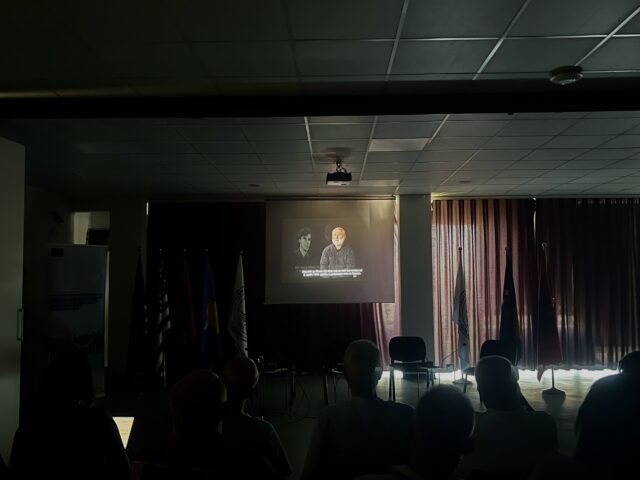
In a deeply emotional public screening on Tuesday, June 9, 2026, BIRN Kosova premiered its latest investigative documentary, “Shpalosja e së Vërtetës” (Unveiling the Truth), before an audience in Gjilan.
The documentary sheds light on the grueling, decades-long struggle of families searching for the remains of loved ones who vanished during the 1998–1999 Kosovo War. Produced after meticulously logging more than 200 hours of interviews with victims’ relatives, eyewitnesses, and forensic investigators, the film captures a systematic campaign of wartime terror designed to erase both human lives and the physical evidence of mass atrocities.
The Historical Matrix: Mass Deportations and Concealed Crimes
The documentary contextualizes the structural nature of wartime disappearances carried out by Serbian forces starting in 1998. Innocent Albanian civilians were rounded up en masse, with approximately 2,000 individuals illegally transferred and held in detention facilities across Serbia, some remaining trapped in the prison system until late 2002.
Furthermore, the film highlights the logistics of wartime concealment, detailing how victims executed in collective massacres inside Kosovo were loaded onto trucks and clandestinely transported into mass graves in Serbia to suppress forensic evidence.
[The Regional Blueprint of the Disappeared]
• Local Impact: Roughly 50 individuals from the municipalities of Gjilan, Kamenica, Ranillug, Partesh, and Vitia remain entirely unaccounted for.
• National Scale: More than 1,500 people across Kosovo are still officially listed as missing.
• Societal Toll: Now 27 years since the end of the conflict, families continue to live in a state of suspended grief, unable to find closure or legal accountability.
Institutional Panel: Facing the Bottlenecks of Forensic Search
Following the screening, a heated public debate exposed the institutional gridlocks, lack of inter-agency communication, and severe geopolitical roadblocks slowing down the recovery process. The panel featured leading figures on the frontlines of the search:
            ┌────────────────────────────────────────────────────────┐
            │       EXPERT PANEL: THE CHALLENGES OF THE SEARCH       │
            └───────────────────────────┬────────────────────────────┘
                                        │
                Core Obstacles & Institutional Calls to Action
                                        │
         ┌──────────────────────────────┼──────────────────────────────┐
         ▼ EVIDENCE DISCOVERY           ▼ ARCHIVAL BLOCKS              ▼ FORENSIC FOCUS
┌──────────────────────────────┐┌──────────────────────────────┐┌──────────────────────────────┐
│  Ilir Morina (Special Prosc) ││ Kushtrim Gara (Gov Committee)││ Ditor Haliti (Forensic Inst) │
│ • Urges immediate civilian   ││ • The main barrier remains   ││ • Assures the public that   │
│   reporting if any skeletal  ││   extracting credible, open  ││   missing persons cases   │
│   remains are encountered.   ││   wartime data from Belgrade.││   hold absolute priority.    │
└──────────────────────────────┘└──────────────────────────────┘└──────────────────────────────┘
Humanizing the Numbers: “1,500 Families, Not Just 1,500 Names”
Kreshnik Gashi from KALLXO.com emphasized that the overriding goal of the documentary project is to shatter the clinical coldness of statistics and force both the public and state officials to look at the human cost of political stalling.
“We wanted to show people that when they hear about the missing, they must understand it is not just a list of 1,500 victims—it is 1,500 living families who cannot fully experience life’s joys because they are trapped in a perpetual cycle of waiting,” Gashi stated.
The screening in Gjilan is part of a broad transitional justice campaign by BIRN Kosova, which will see a series of eight distinct regional documentaries rolled out across eight administrative zones in Kosovo. The initiative aims to weaponize journalistic documentation to keep institutional pressure alive, ensuring that one of the deepest scars of the Kosovo conflict is not erased by time.