Years of structured disinformation campaigns, cross-border propaganda, and nationalist rhetoric continue to warp the economic landscape of the Western Balkans. A joint investigative report highlights how these narrative operations directly damage local investment climates, undermine consumer trust in domestic production, and strain trade relations between Kosovo and Serbia.
The primary targets of these coordinated disinformation efforts are domestic food producers, specifically within Kosovo’s agricultural and livestock sectors. Despite holding rigorous international quality certifications and maintaining healthy export streams across Europe, local brands frequently battle coordinated smear campaigns alleging toxic soil and contaminated products.
Smear Campaigns Weaponized by Market Competitors
A prominent case study in local market destabilization involves persistent claims that Kosovo’s domestic dairy plants bypass local farmers to manufacture goods entirely out of imported powdered milk.
Veli Halimi, owner of the domestic dairy processing firm Qumështorja Sharri, fiercely refuted these claims, identifying them as a calculated form of corporate sabotage engineered by international import syndicates.
“The propaganda claiming Kosovo dairies only use powdered milk has been incredibly powerful, but it has never been true,” Halimi stated. “When local production rises, foreign importers see their sales drop. That is exactly when the propaganda machine spins up—to intentionally collapse consumer trust in domestic products.”
Halimi noted that deep investments, including importing high-yield cattle from Austria and the Czech Republic, mean Kosovo’s domestic dairy sector is fully self-sufficient and operates entirely on fresh milk.
The “Traitor” Label: Politics Stifling Inward Investment
The toxic public discourse also manifests as aggressive political labeling. Prominent Kosovar businessman and former Deputy Prime Minister Ramiz Kelmendi, owner of the Elkos Group conglomerate, is routinely branded a “traitor” by nationalist factions in public forums due to his ongoing commercial imports from Serbia.
Kelmendi shrugged off the online hostility but warned of its broader structural damage to Kosovo’s macroeconomic future. He noted that his firms primarily distribute goods manufactured by major Western corporations that chose to build their regional factories in Serbia rather than Kosovo.
- Missing Out on Foreign Direct Investment (FDI): “If a German corporation opens a massive manufacturing plant in Serbia, that represents Serbia’s strength in attracting capital and our own institutional weakness in missing out on that investment,” Kelmendi explained.
- The Cost of Rhetoric: Constant political polarization and public boycotts create an unstable business environment that actively frightens away international venture capital.
Business Community Maintains Ties Despite Political Gridlock
Despite severe political standoffs between Prishtina and Belgrade, leaders within the commercial sector maintain that economic pragmatism operates on an entirely different wavelength than political theater.
Agim Shahini, President of the Kosovar Business Alliance (AKB), noted that while inherited ethnic animosity persists among certain segments of the population, its economic footprint is shrinking. “Entrepreneurs do not build barricades; they look for mutual profit and market logic,” Shahini stated.
This sentiment is echoed by Enrad, a radiator manufacturing firm based in Gjilan that successfully exports its industrial goods directly into the Serbian market. Enrad executives confirmed that transparent communication and decades of professional consistency have shielded their cross-border B2B contracts from political turbulence.
However, smaller entrepreneurs in the continuous flashpoint of northern Kosovo face steep administrative hurdles. Ivan Vučković, an artisan wood producer based in Leposavić, explained that while he experiences no direct hate speech from Kosovar business partners, the media climate fails to foster ethnic tolerance.
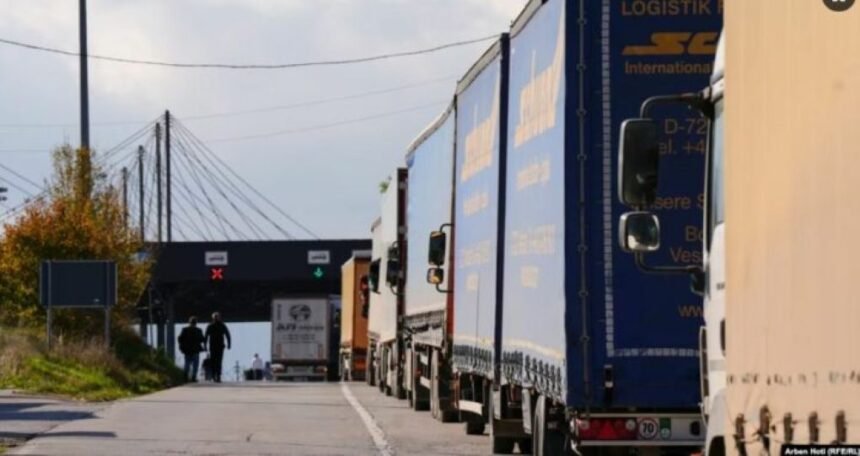
“The structural issue is administrative. We face massive bottlenecks due to political decisions, such as the ongoing import restrictions applied to the two northern border crossings, which directly choke off our access to raw manufacturing materials,” Vučković warned.
Embracing the European Model of Economic Realism
Safet Gërxhaliu, the former President of the Kosovar Chamber of Commerce (OEK), argued that the Western Balkans must urgently adopt the founding logic of the European Union if they hope to escape chronic stagnation.
“The European Union was not built out of romantic love between nations; it was forged through raw economic cooperation,” Gërxhaliu emphasized. “Barricades, fake news, and hate speech only delay integration. Our greatest mistake is that good news is treated as non-news, while negative, nationalist reporting dominates the airwaves, feeding a toxic cycle of economic and social distancing.”
Trade Deficit Analysis: January–May 2026
Despite public boycott campaigns and political friction, official trade data reveals that Kosovo remains heavily reliant on Serbian imports, maintaining a profound trade deficit.
| Trade Metric (Jan–May 2026) | Value (Euros) | Market Dynamic |
| Kosovo Exports to Serbia | €31.68 Million | Limited industrial/agricultural outbound volume |
| Kosovo Imports from Serbia | €91.58 Million | Heavy reliance on raw materials and FMCG goods |
| Total Trade Deficit | €59.9 Million | Kosovo imports 2.9x more from Serbia than it exports |
Ultimately, regional economic experts and business leaders agree on a singular conclusion: until the region establishes verified, fact-based communication channels and removes politically motivated administrative trade barriers, both nations will continue to sacrifice long-term economic growth at the altar of political propaganda.