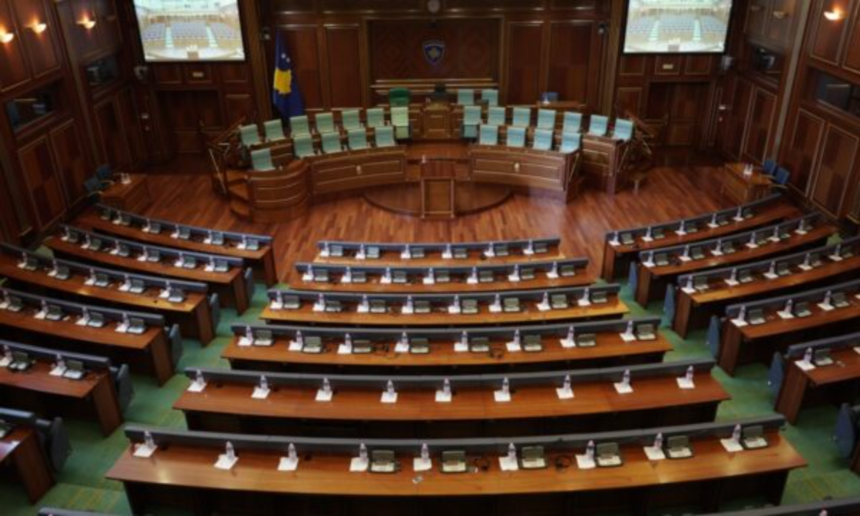
Kosovo’s new parliamentary legislature is expected to convene during the first week of August. Acting President Albulena Haxhiu has announced that the official date of the constitutive session will be made public this Friday.
In this context, Haxhiu stressed that the announcement had not been rushed in order to give political parties additional time to continue negotiations aimed at reaching an agreement, particularly regarding the election of the country’s next president. She also described Acting Prime Minister Albin Kurti’s meetings with opposition parties as constructive, although talks with the Democratic League of Kosovo (LDK) have currently been suspended due to internal developments within the party.
University professor Mazllum Baraliu said continued meetings between the Acting President and political parties are essential, alongside discussions on forming a governing coalition. He emphasized that political parties must increase their efforts to prevent further political crises.
“Unfortunately, judging by this political class, which has proven to be highly irresponsible and often contradictory—saying one thing today, another tomorrow, and ultimately doing something entirely different—I am not particularly optimistic. However, the circumstances are such that the parties should avoid another election, as it could be politically disastrous for all of them, some more than others,” Baraliu told RTK.
Political analysts have also called on all political actors to demonstrate greater responsibility, arguing that Kosovo can no longer afford prolonged institutional deadlock, as every day without fully functioning institutions negatively affects reform efforts and the country’s Euro-Atlantic aspirations.
“It appears that the deepening internal crisis within the Democratic League of Kosovo (LDK) will make the process even more difficult, because any agreement emerging from the party could be weakened by the loss of several votes, and every single vote is crucial. As for the Democratic Party of Kosovo (PDK), there has historically been hesitation toward cooperation, likely because they are the country’s two largest political parties. Nevertheless, cooperation between them could provide solutions to many outstanding political issues,” political analyst Fatime Hajdari said.
With the constitutive session expected to take place during the first week of August, attention remains focused on negotiations between the political parties. The coming days will determine whether they can reach the necessary compromise to constitute the Assembly and pave the way for the formation of Kosovo’s new institutions.