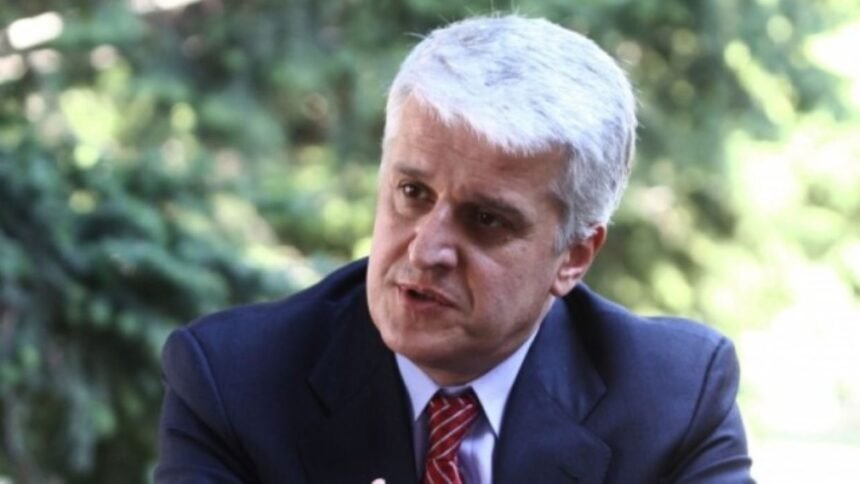
Former Albanian Prime Minister Pandeli Majko has criticized the reported agreement between Albania and Serbia to open new consulates in Shkodër and Bujanoc, arguing that the two diplomatic missions are not comparable given the broader regional and political context.
The remarks came after Serbian Foreign Minister Marko Đurić announced that he and Albanian Foreign Minister Ferit Hoxha had agreed for Serbia to open a consulate in Shkodër, while Albania would establish one in Bujanoc.
Reacting to the announcement, Majko said comparing the two consulates was “more than an irony,” maintaining that the political significance of the Serbian mission in northern Albania differs substantially from Albania’s diplomatic presence in Serbia’s Preševo Valley.
“In Shkodër, the Serbian consulate will have greater significance than the minority itself,” Majko wrote in a social media post.
He argued that the Preševo Valley is a contiguous territory inhabited by Albanians within Serbia, while emphasizing that Albania’s consulate there would effectively bypass Kosovo.
“The Albanian consulate in the Preševo Valley ‘bypasses’ Kosovo. Meanwhile, the Serbian consulate in Shkodër has Montenegro in between,” he said.
Majko further contended that Albania appears to have approached the agreement as a standard diplomatic initiative, while Serbia’s motivations should be viewed differently because of its positions on Kosovo and Montenegro.
“For Albania, the consulate appears to have been treated as a standard expression of diplomatic interest. For Serbia, which does not recognize Kosovo’s sovereignty and continues to question Montenegro’s identity, it is something entirely different,” he wrote.
Concluding his criticism, Majko argued that “Serbia has received more than a consulate in Shkodër,” suggesting the move carries broader political and strategic implications beyond normal consular relations.
The reported agreement has sparked public debate in Albania, with supporters viewing it as part of normal diplomatic engagement between neighboring countries, while critics argue that the symbolic and geopolitical implications deserve closer scrutiny.