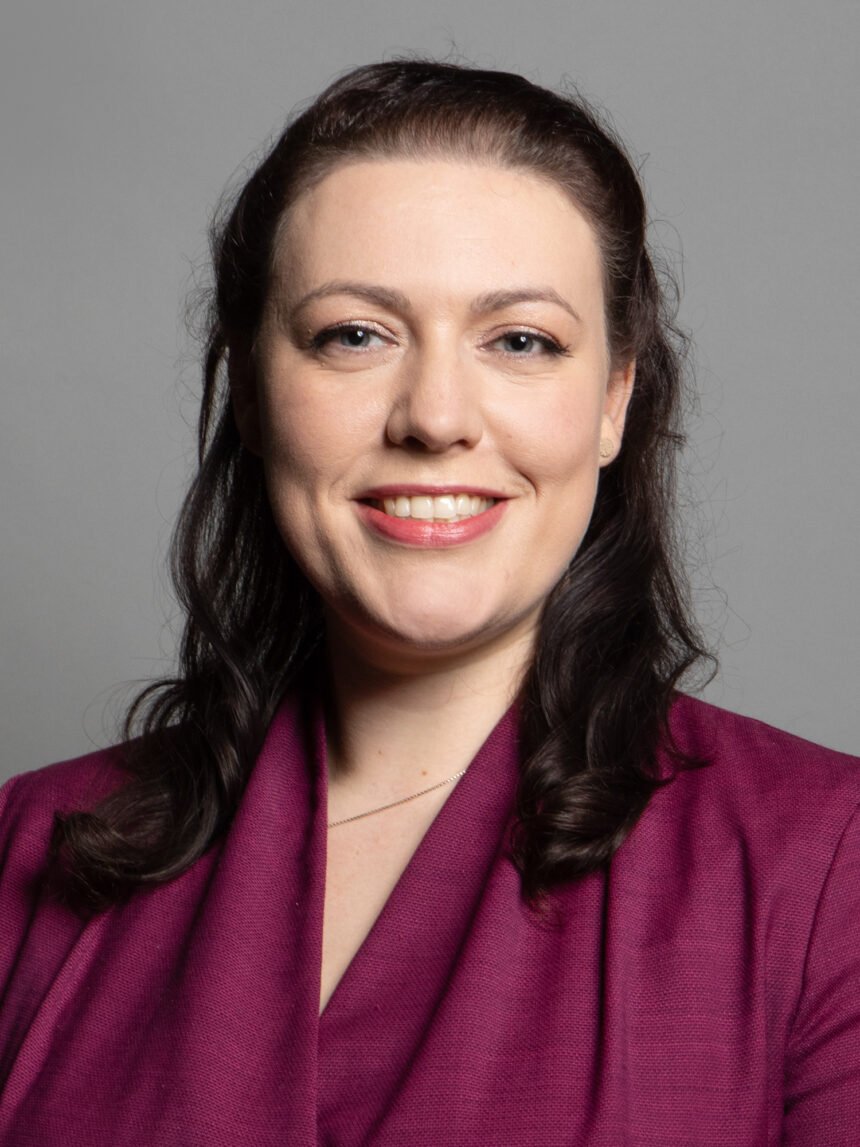
British MP Alicia Kearns has reaffirmed the United Kingdom’s support for Kosovo, saying Britain’s political establishment remains broadly supportive of the country and calling for a stronger, fairer approach to the Kosovo-Serbia dialogue.
Kearns, one of Kosovo’s prominent international supporters, made the comments in a written interview with KosovaPress, addressing Kosovo’s ongoing political deadlock, relations with its international allies, Serbia’s ties with Russia and China, the proposed Association of Serb-Majority Municipalities and the future of the dialogue with Belgrade.
Her comments came after Serbian President Aleksandar Vučić raised the possibility of changing the course of the Ibër River. Kearns responded on X to Albanian Prime Minister Edi Rama’s criticism of the proposal, describing his reaction simply as “diplomacy.”
Addressing Kosovo’s prolonged institutional crisis, Kearns said she wanted to see the country overcome its political divisions and continue developing, but stressed that decisions about Kosovo’s political future ultimately belong to its citizens.
“Democracy and self-determination are precious,” Kearns said, adding that politicians have a responsibility to ensure political differences do not prevent effective governance.
On Prime Minister Albin Kurti’s leadership, Kearns said efforts to combat corruption should be welcomed, while noting that governments across Europe are facing difficult challenges involving the rule of law, security and war.
“Corruption is poison for every society and every effort to eradicate it should be welcomed,” she said.
Kearns strongly defended Britain’s relationship with Kosovo, saying London had maintained positive relations with Prishtina both under the previous Conservative government and since Labour came to power in 2024.
“As a parliamentarian, I can say with confidence that Kosovo enjoys support across the British Parliament,” she said.
She pointed specifically to Britain’s support for Kosovo’s bid to join the Council of Europe and said she continues to advocate for Kosovo’s membership.
Kearns also criticized what she described as unequal treatment of Kosovo and Serbia by the international community.
“I do not believe that the international community has applied equal standards to Kosovo and Serbia,” she said, adding that she still wants justice over the 2023 Banjska attack.
Kearns said Milan Radoičić should be arrested and extradited to Kosovo to face trial.
She also praised former Kosovo President Vjosa Osmani for her efforts to strengthen Kosovo’s international relationships, while emphasizing that Kosovo’s allies also have a responsibility to ensure that the Prishtina-Belgrade dialogue is fair and impartial.
Kearns calls for a reset of the Kosovo-Serbia dialogue
Kearns said the EU-mediated dialogue between Kosovo and Serbia needs a fundamental reset.
Her position on the proposed Association of Serb-Majority Municipalities remains firmly opposed.
“I do not support this initiative,” she said, arguing that Kosovo Serbs already have clearly defined constitutional rights, including guaranteed representation in the Assembly.
Kearns compared the potential risks to developments in Bosnia and Herzegovina, pointing to the actions of Republika Srpska leader Milorad Dodik and warning that a new entity in Kosovo could be used to undermine the state if it were granted powers outside Kosovo’s constitutional framework.
She said any association should only be considered if there are firm guarantees that it would operate within Kosovo’s state institutions rather than against them.
Security in northern Kosovo
Addressing the situation in northern Kosovo, Kearns highlighted the boycott of elections, attacks against KFOR peacekeepers, arms smuggling, criminal activity, the killing of Kosovo police officer Afrim Bunjaku and the subsequent armed confrontation in Banjska.
She said Kosovo Serbs should be able to practice their religion, speak their language and preserve their culture, as guaranteed by Kosovo’s Constitution.
At the same time, she warned against the exploitation of legitimate community concerns for broader Serbian irredentist narratives.
“There needs to be space for local politicians who have the best interests of their communities at heart and can represent them without external pressure and threats,” Kearns said.
Kearns says she sees no evidence Serbia is ready to recognize Kosovo
Asked about Vučić’s policy of balancing relations between the EU, United States, Russia and China, Kearns said she hoped Serbia would eventually recognize Kosovo but had seen no evidence that the current Serbian government was prepared to take that step.
She also warned European countries against closer relations with the Chinese Communist Party, citing concerns over transnational repression, intellectual property theft, state subsidies and alleged espionage.
“Any support for or cooperation with Russia following its illegal and brutal invasion of Ukraine should be condemned without hesitation,” she said.
Kosovo’s Euro-Atlantic future
Kearns argued that Kosovo is already part of the Euro-Atlantic community and said the country has made significant progress in areas including anti-corruption efforts, modernization and the rule of law.
She expressed regret that Kosovo did not secure membership in the Council of Europe in 2024 despite receiving support from the Parliamentary Assembly, saying Britain had provided full backing and should continue working toward Kosovo’s membership.
“I want to see Kosovo take its rightful place in the international community,” Kearns said.
Asked what advice she would give Kurti and Kosovo’s wider political leadership, Kearns called for political leaders to put divisions aside and focus on the country’s long-term interests.
“Kosovo is a young and energetic country, with an ambitious and talented population,” she said. “It is up to the political class to ensure that those opportunities are taken, by putting political differences aside for the common good.”