Deposed Venezuelan leader Nicolás Maduro has asked a U.S. federal judge to dismiss the criminal indictment against him, arguing that he is immune from prosecution as a foreign head of state despite the Trump administration’s position that he is not Venezuela’s legitimate leader.
In a 60-page filing submitted to a federal court in New York, Maduro’s lawyers argued that the prosecution represents an unprecedented violation of the legal immunity traditionally afforded to foreign heads of state and officials acting in their official capacities.
“This unprecedented prosecution violates the absolute immunity from criminal jurisdiction to which heads of state and foreign officials acting in their official capacities have been entitled for hundreds of years,” Maduro’s attorneys argued in the court filing.
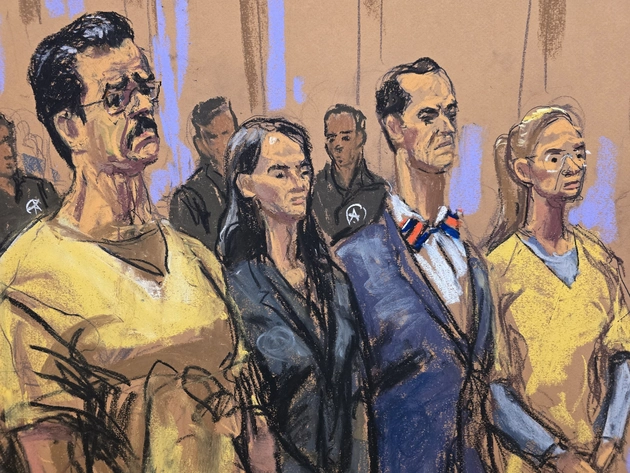
Maduro and his wife, Cilia Flores, were taken into U.S. custody earlier this year and transported to the United States, where they face narcoterrorism and drug trafficking charges. Both have pleaded not guilty, and their trial is scheduled for next summer.
Maduro has previously described himself as a “kidnapped president” and a “prisoner of war,” while maintaining that the U.S. government lacks the legal authority to prosecute him.
Maduro Challenges U.S. Position on His Status
The indictment and public statements by the Trump administration have sought to portray Maduro as an illegitimate ruler of Venezuela.
However, his legal team argues that this characterization is political and does not determine whether he is entitled to immunity.
According to the defense, formal diplomatic recognition is not required for Maduro to claim head-of-state immunity. His lawyers argue that it is sufficient that he exercised the powers of the Venezuelan presidency and acted, at a minimum, as the country’s de facto head of state.
The filing describes complete immunity for sovereign heads of state as a longstanding principle of customary international law and argues that the prosecution violates established common-law principles.
Defense Also Cites Immunity for Official Acts
Maduro’s lawyers presented a second argument, claiming that the alleged conduct described in the indictment involved actions undertaken in his official capacity through the exercise of state powers and institutions.
The defense argues that because the alleged actions are attributable to the Venezuelan state, allowing the prosecution to proceed would require a U.S. court to adjudicate the sovereign actions of a foreign government.
To support their argument, Maduro’s attorneys also cited the U.S. Supreme Court’s recent ruling on presidential immunity, which established limits on judicial scrutiny of a president’s official conduct.
The lawyers argued that the same principle should apply to Maduro and that the court should determine whether the conduct was official without assessing the alleged motives behind it.
The case now places a federal court at the center of a potentially significant legal dispute over the scope of head-of-state immunity, the treatment of de facto foreign leaders and the ability of U.S. courts to prosecute former or disputed foreign heads of state.