Political analyst Dragomir Anđelković has accused Serbian President Aleksandar Vučić of effectively recognizing Kosovo and of sacrificing Serbia’s interests in order to maintain his political power and strengthen relations with Western centers of influence.
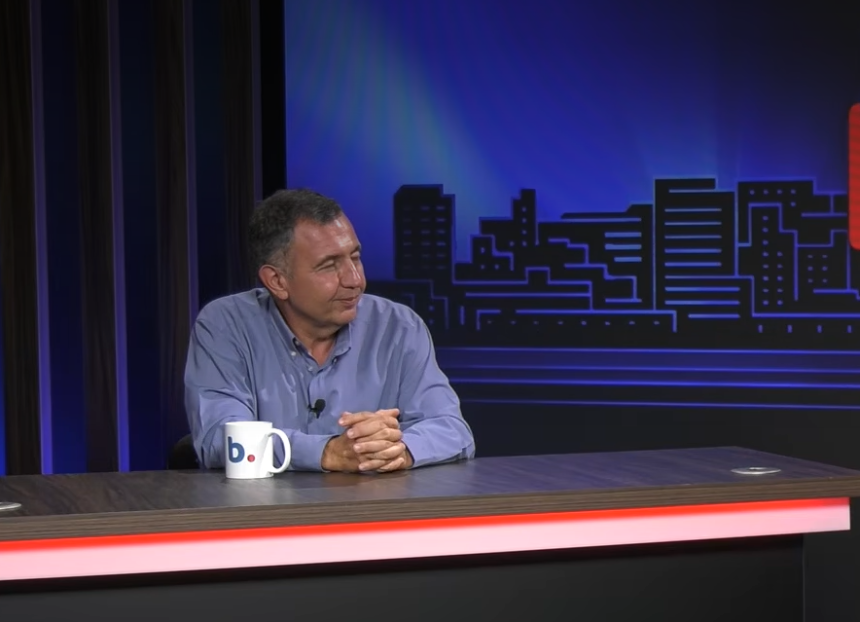
Speaking on KTV television’s “Bez pardona” program, Anđelković argued that Vučić had not simply lost control over northern Kosovo, but had deliberately surrendered it for political reasons.
“Vučić did not lose northern Kosovo; he sold northern Kosovo so that he could continue to rule and curry favor with Euro-Atlantic centers of power,” Anđelković said.
He drew a parallel with former Serbian president Slobodan Milošević’s policy toward the self-proclaimed Republic of Serbian Krajina during the wars of the 1990s, arguing that political decisions in Belgrade had contributed to the loss of Serbian-held territories.
Anđelković also addressed the question of what recognition of Kosovo means in practice, distinguishing between formal diplomatic recognition and the acceptance of Kosovo’s institutions as those of a state.
“They are not asking Vučić to establish diplomatic relations; they are asking him to treat Kosovo as if it were a state, which is what he is doing,” Anđelković said.
According to him, Vučić can therefore maintain that Serbia has not formally recognized Kosovo while pursuing what he described as “de facto recognition.”
Anđelković: Russia will not abandon its Kosovo policy
The discussion also turned to Russia and whether Moscow could eventually change its position on Kosovo as part of a broader geopolitical settlement following the war in Ukraine.
Asked whether Russia could recognize Kosovo in exchange for international acceptance of Crimea, Donbas and other territories under Russian control, Anđelković rejected the possibility.
He argued that Russia would be unlikely to obtain formal international recognition of its territorial claims and could instead receive a model in which those territories are not formally recognized but are effectively tolerated.
Anđelković said Moscow would nevertheless have little incentive to recognize Kosovo because doing so would undermine its own arguments on international law.
“Russia will not abandon its Kosovo policy because that policy reminds the world that the West first undermined international law, not Russia,” he said.
He argued that Moscow would also continue rejecting the idea that Kosovo represents a unique case in which Western powers could alter borders while maintaining that similar actions elsewhere are illegal.
“There is no question of a change in Russian policy,” Anđelković said.
Calls for closer ties with Russia and China
Discussing Serbia’s potential foreign-policy partners, Anđelković said his positive view of Russia was based on what he described as Serbia’s national interests rather than sympathy toward Russia itself.
“My positive geopolitical attitude toward Russia comes from Serbophilia, not Russophilia,” he said, arguing that Serbia should seek partners that are not directly opposed to its interests.
He singled out France, Britain and Germany for criticism, citing their recognition of Kosovo and, in his view, policies unfavorable to Serbia and Serbs in the region.
“Can France be our partner, given that it recognized Kosovo, participated in the aggression against Serbia and today supports the centralization of Bosnia and Herzegovina? It cannot,” Anđelković said.
He similarly rejected the idea that Britain and Germany could be considered Serbia’s “true partners.”
Instead, he identified China and Russia, as well as other countries that have not recognized Kosovo, as potential partners for Belgrade.
Anđelković attacks Vučić’s political priorities
Anđelković concluded by accusing Vučić of prioritizing his own political position over Serbia’s national interests.
“The other thing is that Vučić simply does not care about Serbian interests; he is trying to lobby only for himself, while Serbian interests matter to him as much as last year’s snow,” he said.
At the same time, Anđelković argued that a different Serbian government could potentially seek common ground with political forces in the United States, suggesting that Washington could still offer opportunities for advancing Serbian interests.
Anđelković’s remarks reflect a broader debate in Serbia over Vučić’s policy of balancing relations with Russia, China, the European Union and the United States while refusing to formally recognize Kosovo.
The claims made by Anđelković represent his political assessment and were not presented as established findings by Serbian state institutions.