New York City Public Schools, the largest public school system in the United States, has introduced one of the country’s strictest policies on generative artificial intelligence, restricting student-facing AI tools in classrooms through eighth grade during the current school year.
The moratorium follows pressure from parents and education advocates who had urged New York City Mayor Zohran Mamdani to impose a two-year ban on the use of artificial intelligence in classrooms.
The policy comes amid a broader backlash against technology in schools, with districts across the United States introducing tighter limits on screen time and digital devices. Los Angeles Unified, the country’s second-largest public school district, is among those adopting similar restrictions.
New York state also moved to limit technology use in schools last year when Gov. Kathy Hochul signed legislation restricting students’ use of smartphones in public schools.
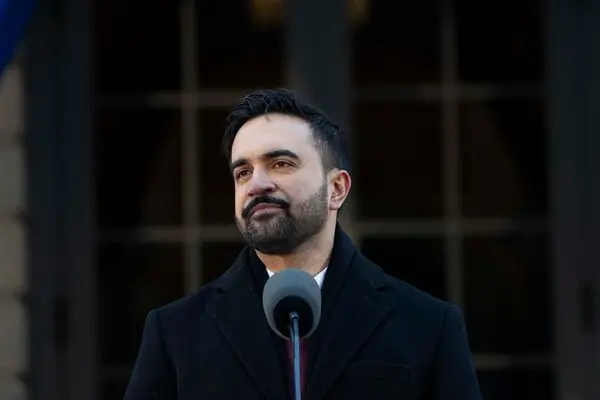
Mamdani said the new AI policy was intended to protect students’ ability to develop independent thinking and interpersonal skills.
“This moratorium is a commitment to getting the future right,” Mamdani said during a news conference Wednesday. “Children need to learn to think for themselves, they need to work together with their peers, they need to learn how to ask better questions and they need to learn what it is like not to know the answer.”
The city’s plan calls for a one-year pause that could later be extended or modified depending on the results of the first year.
AI tools to be disabled on school platforms
Under the new policy, New York City will also disable AI components on more than 38 technology platforms previously available to students.
If an AI feature cannot be removed from a particular program, the school system will prohibit its use, according to the policy.
The city is also introducing stricter screen-time recommendations for younger students. Schools are advised to limit screen use to 30 minutes for students in third through fifth grades and 45 minutes for students in sixth through eighth grades.
Older students to receive AI education
The restrictions will not apply in the same way to older students.
For high school students, the city plans to pilot five rigorously vetted educational AI programs at selected schools. The programs are intended to explore how artificial intelligence can be used in education under controlled conditions.
The city will also introduce two 45-minute AI literacy modules designed to teach teenagers about algorithmic bias, potential risks and ethical issues associated with artificial intelligence.
The approach reflects a growing debate in U.S. education over how schools should respond to rapidly advancing AI technology: whether to restrict its use to protect traditional learning skills, or incorporate it into classrooms while teaching students how to use it responsibly.
New York City’s policy attempts to draw a distinction between the two approaches, limiting student access to generative AI during the earlier years of education while allowing controlled experimentation and AI literacy programs for older students.