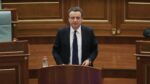
Albanian Prime Minister Edi Rama has said he remains open to dialogue with students and university lecturers amid two weeks of protests in Tirana, while insisting that governments in a democracy must change through elections rather than violence.
In an interview with the Greek newspaper Kathimerini, Rama addressed the recent unrest in the Albanian capital, where demonstrations have included clashes between protesters and police, and reaffirmed his commitment to Albania’s European Union integration.
Rama said the Albanian people had given his government a mandate in last year’s elections and that he intended to fulfil it. He ruled out resigning, arguing that demands for his departure were legitimate in a democracy but could not be enforced through violence.
“I have never claimed that everything in Albania has been done well,” Rama said, acknowledging concerns among young people about education, the cost of living and the lack of opportunities.
He described these concerns as legitimate and deserving of substantive responses. Rama also said the government’s upcoming 2027 budget would include additional measures for families, public services and students.
The prime minister added that he had invited students and teachers to engage in open dialogue and was willing to consider serious proposals, including those from his strongest critics.
Rama distinguishes students from violent protesters
Rama drew a distinction between students seeking better prospects and masked demonstrators whom he accused of attacking public buildings and damaging private property.
He referred to protesters who allegedly threw Molotov cocktails and said violence could not be justified in the name of an entire generation.
“Fighting corruption is the responsibility of the justice institutions,” Rama said, arguing that those who resort to violence could not claim to represent all young people.
He also stated that he would not engage in dialogue with individuals he described as violent, while maintaining that he was willing to discuss substantive concerns raised by students and educators.
EU membership remains a priority
Asked whether he intended to resign, Rama responded that he would continue carrying out the mandate granted to his government by voters.
“In a democracy, governments change through elections, not Molotov cocktails,” he said.
Rama reiterated his ambition for Albania to join the European Union by 2030, saying that protecting citizens’ rights, responding to legitimate grievances and advancing European integration remained his responsibilities.
“I will not deviate from this duty because a minority believes that setting the country on fire is the shortest route to power,” he said.
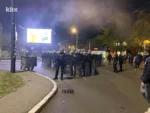
The interview comes amid continued protests in Tirana, where demonstrators have raised concerns about education, corruption and the rising cost of living. The unrest has also prompted clashes with police and a series of arrests, intensifying political tensions in the country.