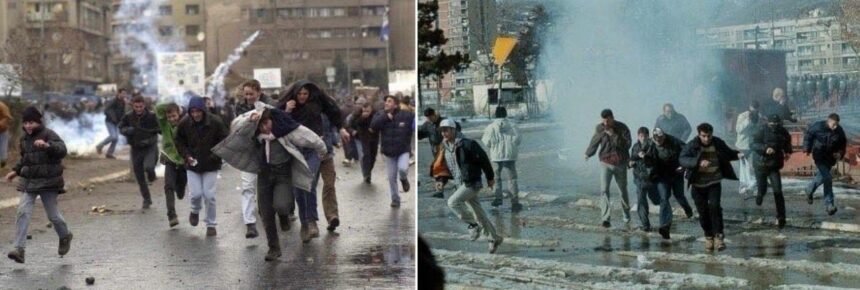
Commemorative activities are being held today in Mitrovica to mark the 26th anniversary of the “Night of Terror,” a tragic event symbolizing violence and ethnic cleansing against Albanians in the northern part of Kosovo.
The remembrance program began with the unveiling of a commemorative plaque at the new pedestrian bridge at 11:00, serving as a symbolic tribute to the victims of the attacks.
At 12:00, an exhibition featuring photographs documenting the events of the “Night of Terror” opened at the Cultural Center, presenting visual evidence and testimonies reflecting the suffering experienced during that tragic night.
The commemorative activities continued at 12:30 with the lighting of candles at the new bridge, representing a symbolic homage to those who lost their lives and to the broader tragedy endured by the Albanian population in northern Mitrovica.
Background of the 2000 Ethnic Cleansing
Twenty-six years ago, during the night between February 3 and 4, 2000, an organized operation carried out by Serbian police forces and the paramilitary group known as the “Bridge Watchers” resulted in the forced ethnic cleansing of Albanians from northern Mitrovica.
During the operation, thousands of Albanians were violently expelled from their homes south of the Ibar River, marking one of the most traumatic post-war events in Kosovo.
According to historical records, 10 Albanians were killed and 25 others were injured during the attacks.
Remembering the Victims
In remembrance and respect, the victims of the tragedy are honored and remembered:
- Nezir Voca
- Shqipe Voca
- Niman Sejdiu
- Bashkim Rrukeci
- Sebiha Abrashi
- Selime Berisha
- Muharrem Sokoli
- Nderim Ajeti
- Nerimane Xhaka
- Remzije Canhasi
The victims ranged in age from 13 to 65 years old, highlighting the indiscriminate nature of the violence carried out that night.
Ongoing Significance
The annual commemoration serves as a reminder of the humanitarian consequences of ethnic violence and the importance of preserving historical memory, while honoring those who lost their lives and those who were forcibly displaced.