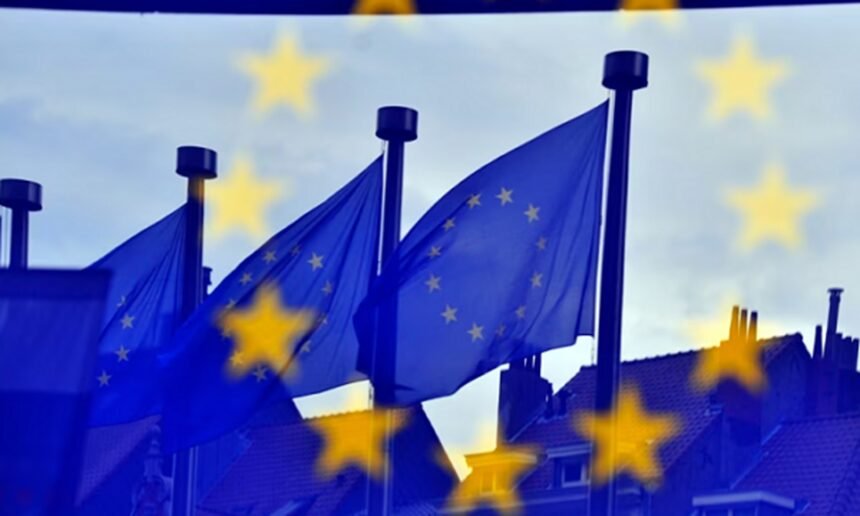
The European Commission confirmed it has received a letter from German Chancellor Friedrich Merz proposing that Ukraine be granted associate member status, while Western Balkan countries receive observer status within the European Union.
European Commission spokesperson Guillaume Mercier said the institution welcomes the fact that discussions on the proposal are taking place among EU member states and encouraged further debate at the leadership level.
“This shows there is a strong commitment among member states to make enlargement a reality as soon as possible. It is becoming increasingly clear that enlargement is a geostrategic investment in our prosperity, peace, and security. Ukraine’s membership in the European Union is also fundamentally linked to the security of our bloc,” Mercier said during a press conference.
He added that it remains equally important to achieve the goal of completing the European Union with all candidate countries that have been working toward membership for many years.
“All innovative solutions must be guided by a merit-based process. Looking ahead, we need to ensure that our approach to enlargement is fit for purpose,” Mercier stated.
According to him, the European Commission will continue working closely with member states and candidate countries to find the best solutions that would make the EU stronger and more secure.
In the letter made public on May 21, Chancellor Merz proposed privileged access to the EU single market and closer institutional ties for the Western Balkans and Moldova during the accession process.
The European Single Market allows the free movement of goods, services, capital, and people across the EU without customs barriers or tariffs.
Merz also proposed granting Western Balkan countries observer status in all relevant EU institutions, as well as organizing joint meetings between the European Commission or European Parliament and representatives from the region on issues directly affecting them.
“Gradual integration can be achieved through building blocks that would serve as the basis for the full implementation of relevant policy areas, followed by greater support in applying EU laws. This can significantly bring candidate countries closer to us and encourage renewed ambition for further reforms toward full membership,” the letter states.
Merz stressed that the EU must remain firmly committed to its promise that the Western Balkans and Moldova can join the European Union, as outlined in the Copenhagen Criteria and the 2003 Thessaloniki Agenda.
“Our goal has not changed: completing the European Union through the inclusion of all candidate countries,” the German chancellor wrote.
Among the Western Balkan countries, Albania, Montenegro, Serbia, Bosnia and Herzegovina, and North Macedonia are official EU candidates, while Kosovo still does not hold candidate status.
Regarding Ukraine, Merz proposed significantly closer integration with the EU and its institutions “without affecting the ongoing accession negotiations, but rather encouraging and supporting that process.”
The German government believes these proposals do not require changes to the EU’s legal or institutional framework, but only “a strong political agreement.”