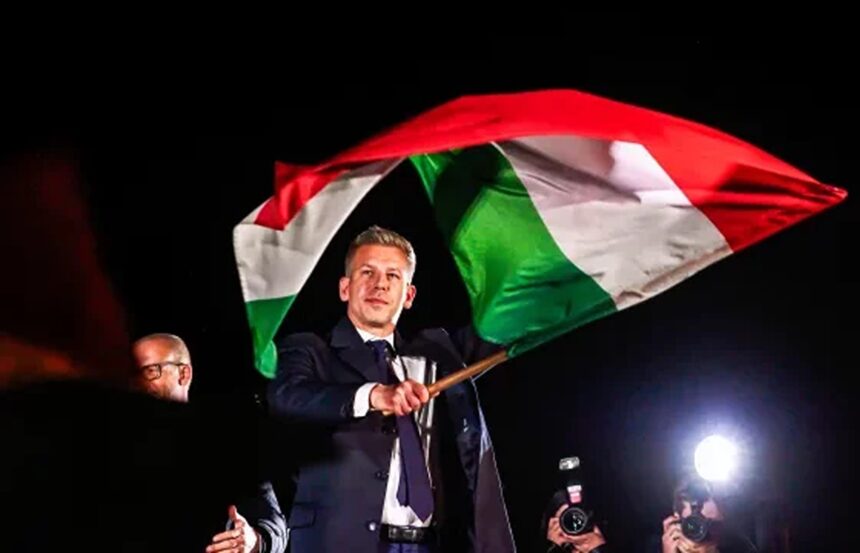
After 16 years of rule that turned Hungary into a focal point of clashes with the European Union, the era of Viktor Orbán is portrayed as coming to an end. Now, the country’s new prime minister, Peter Magyar, faces a monumental challenge: dismantling an entrenched state apparatus and steering Hungary back toward European democratic standards.
A rapid offensive against the old system
Magyar’s first moves in power have been swift and uncompromising. He has called for the resignation of figures loyal to Orbán across key institutions, signaling a firm intent to break with the past. In a symbolic and widely shared moment, he posted a video observing Orbán from a nearby balcony, describing it as “absolute cinema” an ironic nod to the one of Europe’s longest-serving leaders.
Beyond symbolism, Magyar has launched a campaign against what he calls a “factory of lies,” suspending state media broadcasts until editorial independence is guaranteed. This move was publicly supported by dozens of journalists from the state agency MTI, who demanded professional freedom.
The power of a supermajority
Magyar’s sweeping electoral victory 137 out of 199 seats in parliament gives him a constitutional supermajority. Under Hungary’s legal framework, this allows him to amend the constitution, the very tool Orbán used to consolidate control over the judiciary, prosecution, and media.
Resetting relations with the EU
The political shift is not just domestic, it is economically crucial. Due to rule-of-law concerns, the European Union had frozen around €17 billion in funds for Hungary.
Following the change in leadership, Ursula von der Leyen called for swift action, stressing that restoring European values is a non-negotiable condition for unlocking these funds. The shift may also unblock broader EU initiatives, including major financial packages previously stalled by Orbán.
Shifts in global alliances
Orbán had cultivated close ties with Donald Trump and the MAGA movement, positioning Hungary as a model for conservative politics. However, following Magyar’s rise, Trump has reportedly distanced himself, describing the new leader as “a good man” who will “do a good job.”
A future between hope and uncertainty
Despite the dramatic start, key questions remain. As a former insider of the old system, Magyar still holds conservative views on social issues and migration. Observers warn that while his supermajority gives him immense power, it is unclear how he will ultimately use it.
For many, this moment represents a second шанс for Hungary comparable to the post-communist transition of the 1990s. Whether Peter Magyar becomes a true architect of democratic reform or simply reshapes power in a new form remains the defining question ahead.