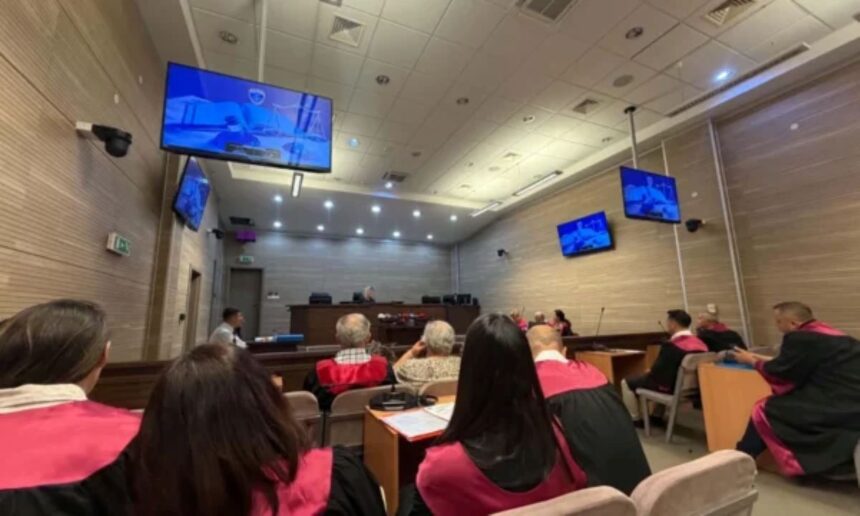
The Basic Court in Prishtina on Monday opened the initial hearing in the criminal case against 21 Serbian officials accused of war crimes against the civilian population in connection with the Raçak Massacre, one of the most notorious atrocities committed during the 1998–1999 Kosovo war.
The Special Department of the Basic Court announced that the indictment targets the following defendants: Zllatomir Pešić, Mladen Cirković, Radomir Marković, Duško Adamović, Obrad Stevanović, Živko Trajković, Goran Radosavljević, Bogoljub Janićijević, Slaviša Ivanović, Boško Vukićević, Sreten Popović, Nikola Petrović, Krsman Jelić, Ljubiša Stojimirović, Božidar Delić, Radojko Stefanović, Dragan Živanović, Miloš Gjošan, Ljubinko Cvetić, Božidar Filić and Milovan Kovačević.
According to the court, the Special Prosecution of the Republic of Kosovo has requested that the proceedings be conducted in absentia, as all of the accused remained beyond the reach of Kosovo’s judicial authorities at the time the indictment was filed.
The prosecution has also issued a public call for the defendants to surrender voluntarily and appear before the law enforcement authorities of the Republic of Kosovo.
According to the indictment, between 1998 and 1999, the defendants, acting jointly as members of the former Yugoslav Army’s 243rd Mechanized Brigade of the Third Army, known as the “Prishtina Corps,” together with members of Serbia’s Ministry of Internal Affairs (MUP), allegedly committed war crimes against the civilian population.
Prosecutors allege that Serbian forces surrounded the village of Raçak from several directions before launching an artillery assault. The indictment states that security forces then entered the village, searched homes one by one, separated men from women and children, forced the latter to leave, and executed the detained men.
The prosecution further alleges that civilians were subjected to inhumane treatment, including severe physical abuse with rifle butts, kicks, wooden sticks, chains and other blunt objects. The indictment also accuses the defendants of destroying property, carrying out mass expulsions and participating in the ethnic cleansing of the civilian population.
Investigators say approximately 20,000 civilians from the villages of Raçak, Topillë, Petrovë, Kraishtë, Mullopolc and Drenjak were forcibly displaced from their homes during the military operation.
The Raçak Massacre, in which 45 Kosovo Albanian civilians were killed in January 1999, became a defining event of the Kosovo conflict and drew widespread international condemnation, contributing to NATO’s decision to intervene militarily later that year.