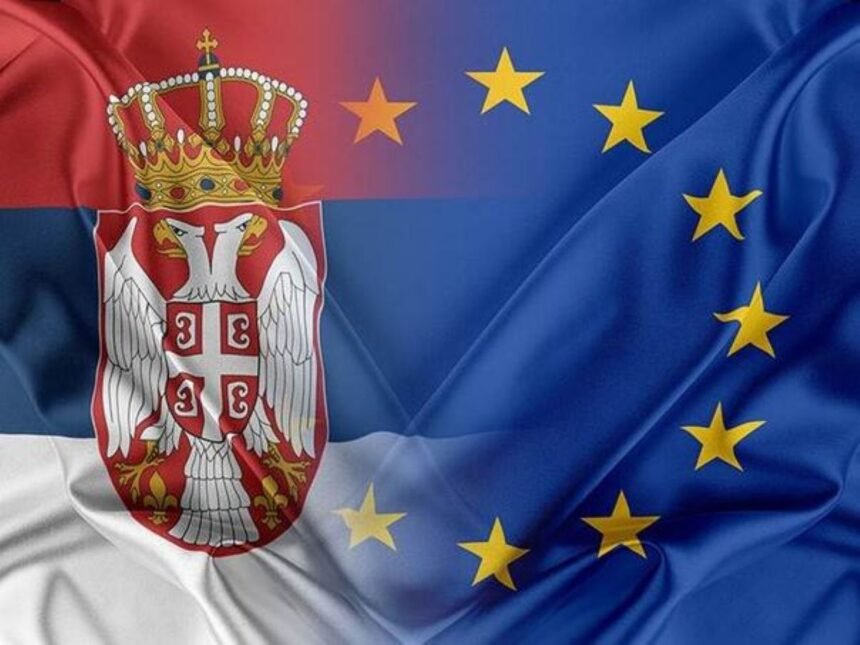
Serbia has emerged as the only European Union candidate country in the Western Balkans that has not aligned with a series of recent EU foreign policy decisions related to Ukraine, Russia, and cyberattacks, according to an official EU statement.
The decisions, adopted by the Council of the European Union in March 2026, include restrictive measures targeting activities that undermine Ukraine’s sovereignty, destabilizing actions attributed to Russia, and cyber operations directed against the EU and its member states.
Specifically, Serbia did not align with Decision (CFSP) 2026/696 of March 14, which concerns sanctions linked to threats against Ukraine’s territorial integrity. It also declined to support Decision (CFSP) 646 of March 16 addressing destabilizing Russian activities, as well as Decision (CFSP) 588 of the same date related to cyberattacks against the EU.
In contrast, all other Western Balkan EU candidate countries—North Macedonia, Montenegro, Albania, and Bosnia and Herzegovina—have aligned their national policies with these measures.
The EU welcomed the commitment of these countries to harmonize with its foreign policy framework, emphasizing that such alignment remains a key requirement in the accession process.
Serbia’s continued divergence from EU foreign policy positions highlights ongoing challenges in its path toward membership, particularly in the area of external alignment, which Brussels considers a crucial indicator of political and strategic commitment to the bloc.