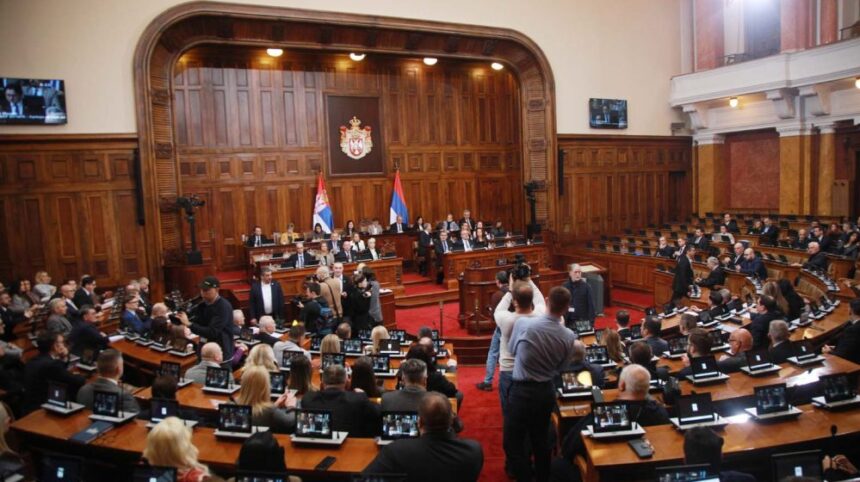
Opposition parties in Serbia have accused the ruling Serbian Progressive Party (SNS) of deliberately obstructing parliamentary proceedings after lawmakers from the governing majority left the National Assembly chamber, preventing a quorum during a session requested by the opposition.
The session, which was scheduled to address a motion of no confidence in the government, was delayed after only 32 of 250 members of parliament remained present in the chamber following the departure of SNS deputies and their coalition partners shortly after the national anthem was played.
The parliamentary session was initially postponed for one hour due to lack of quorum before being rescheduled multiple times for April 16.
Representatives of the opposition parties Serbia Centre (SRCE) and the Green–Left Front (Zeleno-levi front, ZLF) strongly criticized the ruling coalition, describing the move as a “planned performance” aimed at avoiding accountability and public debate.
SRCE MP Slobodan Cvejić said the situation reflected a “strategy of shutting down parliament by denying quorum,” arguing that the ruling majority was attempting to project political dominance while avoiding scrutiny over governance and corruption allegations, including the “Generalštab” case.
He further claimed that the government was increasingly avoiding parliamentary debate due to internal political insecurity and fear of dissent within its own ranks.
ZLF MP Biljana Đorđević also accused the ruling coalition of deliberately blocking debate on the no-confidence motion, stating that the government was “fleeing from responsibility” and avoiding elections. She argued that procedural justifications related to legislative urgency were being used as a pretext to prevent discussion of political accountability.
Opposition lawmakers said that repeated disruptions of parliamentary work demonstrated a broader pattern of weakening institutional procedures and undermining legislative oversight.
The government and ruling SNS have not issued an official response to the latest opposition accusations at the time of reporting.