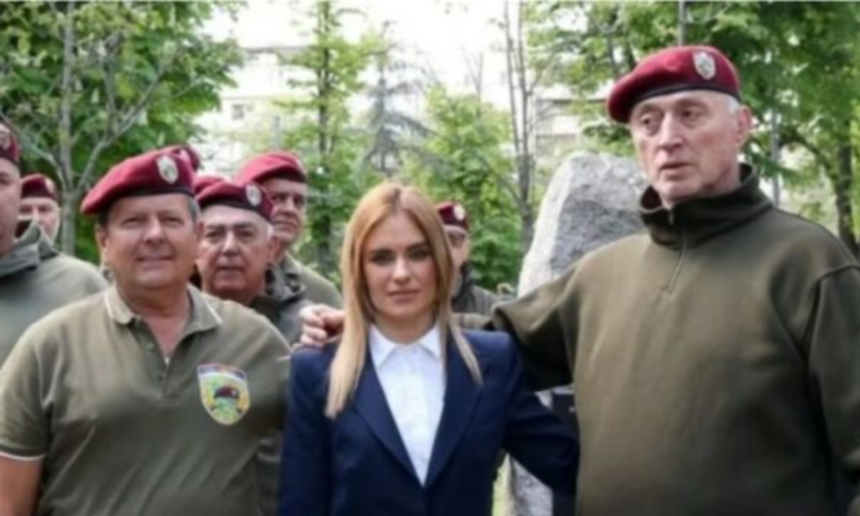
The Serbian government is financing the Association of Red Berets Veterans — an organization gathering former members of Serbia’s disbanded Special Operations Unit (JSO), widely known as the “Red Berets” — using public state funds.
Several members of this unit were involved in war crimes during the conflicts of the 1990s, while others were convicted for political assassinations inside Serbia.
According to an investigation by Radio Free Europe’s Balkan Service, Serbia’s Ministry of Labor, Employment, Veteran and Social Affairs allocated approximately €23,000 to the association over the past two years through public funding programs.
The organization reportedly received support in every veterans-related competition organized by the ministry since Milica Đurđević Stamenkovski, leader of the far-right “Zavetnici” party, took charge of the institution.
The ministry did not clarify how exactly the public funds were spent or what public interest justified financing projects linked to the Red Berets veterans association.
The Red Berets, formally known as the Special Operations Unit (JSO), were established by Serbia’s State Security Service under Jovica Stanišić and Franko Simatović — both close associates of former Yugoslav president Slobodan Milošević.
In 2023, Stanišić and Simatović were sentenced in The Hague to 15 years in prison each for aiding and supporting war crimes in Bosnia and Herzegovina.
The unit also participated in the Kosovo war during 1998–1999 under the command of Milorad Ulemek, known as “Legija.”
The JSO was officially dissolved in 2003 following the assassination of Serbian Prime Minister Zoran Đinđić. Several former members were convicted for political murders, including Đinđić’s assassination, the killing of former Serbian President Ivan Stambolić, and attacks against opposition figures.
Despite this history, veterans of the unit continue to appear at public and political events in Serbia and have openly expressed support for Serbian President Aleksandar Vučić and the ruling Serbian Progressive Party.
Earlier this year, veterans linked to the unit participated in gatherings supporting the Serbian government in Belgrade. Some were led by former commanders and controversial figures associated with wartime operations in Kosovo and the former Yugoslavia.
Journalist Filip Švarm, editor of the Serbian weekly “Vreme,” criticized the rehabilitation of the unit’s image, stating:
“When you turn such a unit into heroes, despite knowing its wartime record, you have to ask what values this government is promoting.”
The case has reignited debate over Serbia’s relationship with the legacy of the 1990s wars, transitional justice, and the public rehabilitation of individuals and structures connected to war crimes and political violence.