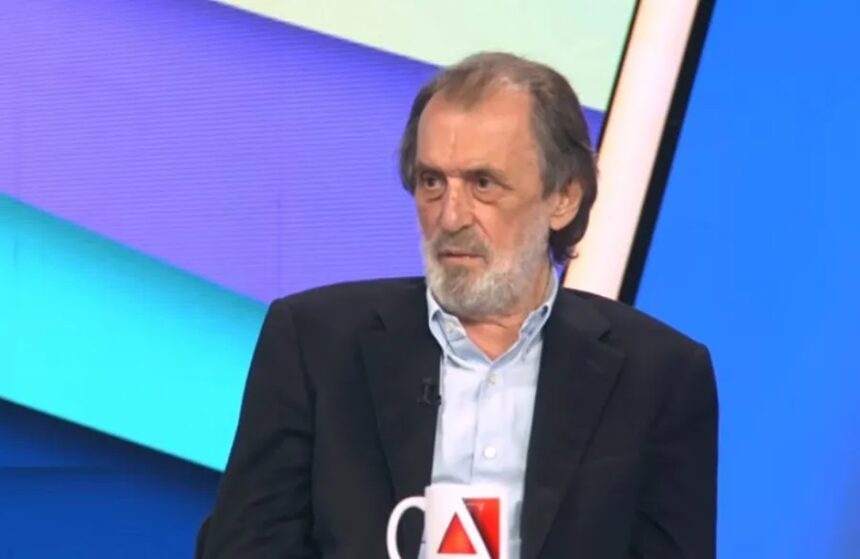
Serbia has not truly freed itself from the system established under Slobodan Milošević, as the same political mentality continues to dominate today. This was stated by writer and former Serbian opposition leader Vuk Drashkoviq in an interview with the Montenegrin portal Pobjeda, reported by Rks News.
While expressing optimism about Montenegro’s EU membership, Drashkoviq said that Serbia remains “strategically, spiritually, and civilizationally in the captivity of the KGB order,” comparing the political climate to authoritarian regimes like Iran. He added that Milošević is still glorified in Serbia, student protesters are labeled as “traitors” and “terrorists,” and anti-Western propaganda has distorted collective consciousness. According to him, for over three decades, a deliberate “engineering of forgetting” has erased from public memory the role of the anti-Milošević opposition and the protests of the 1990s.
In a direct critique, he stated that most Serbian citizens believe the US, EU, and NATO are enemies, even though millions of Serbs live and work in these countries. Drashkoviq emphasized that anti-Western sentiment in Serbia is extremely high, while support for Russia and President Vladimir Putin is excessive and dangerous. He added that political and religious elites have contributed to this orientation.
Speaking on Russian influence in Serbia, Drashkoviq said it is “deep and enduring.” Regarding the military alliance between Kosovo, Albania, and Croatia, which Aleksandar Vučić claims poses a threat to Serbia, Drashkoviq noted that fear rhetoric is used to justify armament, while the real threat comes from Russian influence on domestic politics.
He also observed that although there are ongoing protests in Serbia against the system, the authorities respond with repression, and real change is absent. Unlike in the 1990s, today’s protesters no longer carry pro-European symbols, public fear of stigmatization has increased, and public discourse has shifted toward caution and self-censorship.