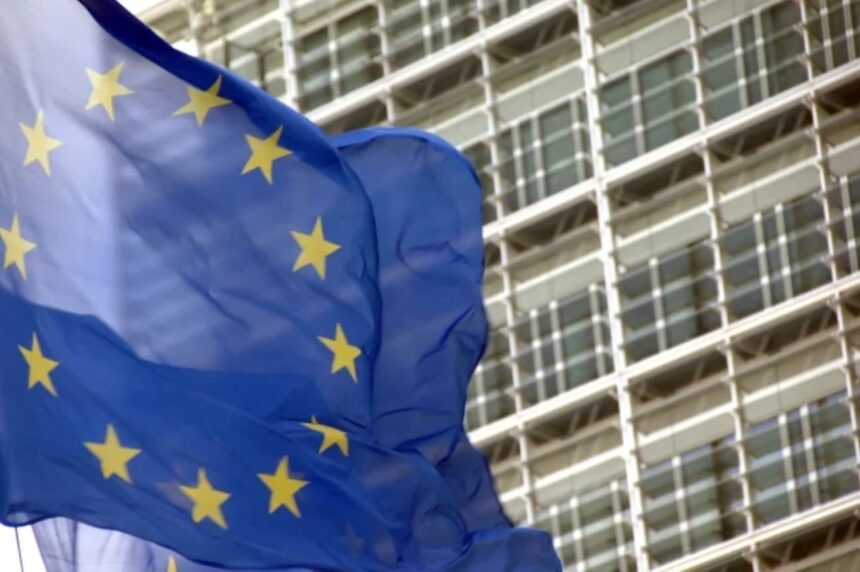
Benjamin Haddad, French Minister for European Affairs, stated on Tuesday that the accession of the Western Balkans, as well as Moldova and Ukraine, to the European Union (EU) is a geopolitical necessity for Europe.
“France’s position is clear. The integration of the Western Balkans, alongside Moldova and Ukraine, is both a geographic and political imperative for Europe. Stability is essential in light of various interferences, making enlargement a matter of strategic importance,” Haddad said during a conference at the French Institute of International Relations (Ifri) in Paris.
The conference, titled “Is EU Enlargement a Strategic Choice? France, the Western Balkans, and the European Union in an Uncertain Geopolitical Context”, focused on the challenges and strategic significance of EU expansion.
Haddad emphasized that the accession process is long and demanding, requiring candidate countries to meet standards on the rule of law, judicial and economic reforms, and the implementation of democratic values.
“The enlargement process is lengthy due to the implementation and compliance with reforms, and this should not be viewed as a delay. France supports candidate countries in economic and judicial reforms and ensures that they benefit from integration into Europe’s market economy,” Haddad said.
He also highlighted the importance of sending political signals to candidate countries, showing that they are moving closer to EU membership, and underlined France’s role in modernizing and adapting the enlargement process to each candidate.
Haddad called for deepening the EU’s internal market, enhancing cooperation on defense, and building a European political community to unify objectives across the continent.
“Strengthening the Western Balkans’ role within the European political community is necessary. France has strong cooperation with these countries and will continue to support them, especially in times of uncertainty. Enlargement is a long process, but reforms must be deep and comprehensive to ensure a stronger EU alongside new members,” he said.
Pierre Vimon, senior fellow at Carnegie Europe and former Executive Secretary-General of the European External Action Service (EEAS), noted that public awareness in France about the EU enlargement process is low. Many citizens are unfamiliar with the procedure or the candidate countries. He suggested that debates in both public forums and political parties are essential to avoid surprises when countries like Montenegro eventually join the EU.
Dominique David, president of the Franco-Austrian Center for European Convergence (CFA), added that many candidate countries, especially in the Western Balkans, feel they have been waiting too long for EU membership, emphasizing the need for cohesion in Europe amid strategic competition and destabilizing influences.
The conference, organized in partnership with the European Fund for the Balkans (EFB) and the Balkans Policy Advisory Group (BiEPAG), highlighted that EU enlargement should be viewed not only as a political integration project but also as a strategic tool for continental stability and credibility, particularly in the context of Russia’s war in Ukraine and rising geopolitical tensions involving China and the United States.