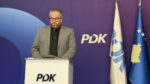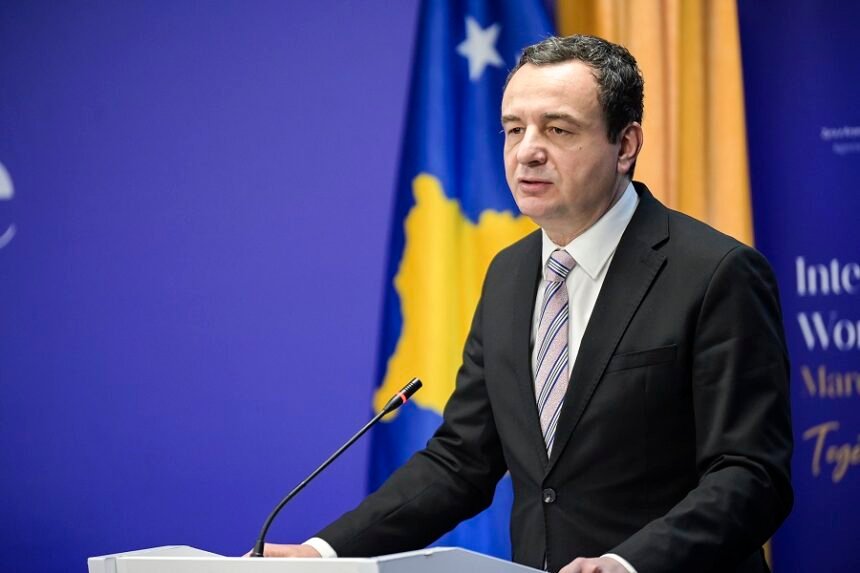
Kosovo’s Prime Minister, Albin Kurti, commemorated the 27th anniversary of NATO’s intervention, highlighting its crucial role in stopping ethnic cleansing during the conflict in Kosovo.
Kurti outlined the chronology of events, noting that diplomatic efforts had failed, leaving NATO no choice but to launch an air campaign against Serbian forces.
“This campaign took place more than a year after the start of the war in Kosovo and one day after it became clear that Serbia, led by the ‘Butcher of the Balkans,’ Slobodan Milošević, would not accept any ultimatum to halt military and police operations against the civilian population, nor withdraw its forces from Kosovo, and that diplomatic offers for a political resolution would be rejected,” Kurti stated.
He expressed gratitude to NATO member states for their intervention and singled out the United States for its extraordinary role.
“Therefore, we remember with gratitude the exceptional assistance of all NATO countries and especially honor the role of the United States of America in the path of the people of Kosovo toward freedom, democracy, state-building, and integration,” Kurti said.
Kurti recalled that on March 24, 1999, NATO, led by the United States, launched Operation Allied Force, targeting Yugoslav military and police forces and infrastructure. Despite diplomatic efforts and ultimatums, Serbia did not cease its operations, leading to 78 days of NATO airstrikes, which concluded with the Kumanovo Military-Technical Agreement on June 10, 1999.
During this period, Serbia intensified actions to implement “Operation Patkoi,” forcibly displacing over 860,000 Albanians and internally relocating around 500,000 more. In April 1999 alone, more than 4,000 civilians were killed, many in massacres across Kosovo, with numerous others still missing.
Kurti emphasized that NATO’s intervention, in conjunction with the Kosovo Liberation Army’s efforts, ultimately secured Kosovo’s freedom and paved the way for democracy and state-building.