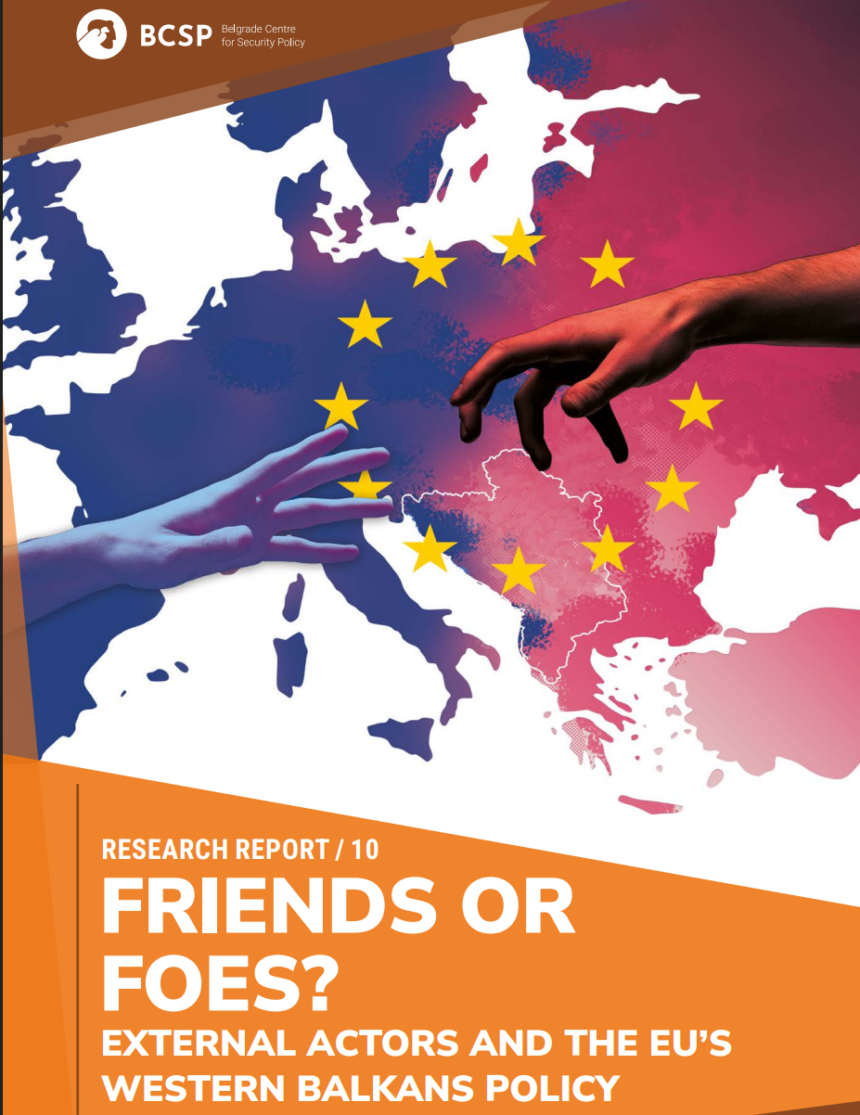
Kosovo appears in the Belgrade Centre for Security Policy’s (BCSP) new Threatometer report not as a primary subject, but as a reference point: a target of Russian disinformation, recipient of Turkish peacekeepers, and a factor in regional diplomatic tensions. The report, authored by Dimitar Bechev (Carnegie Europe) and Srdjan Cvijić (BCSP), focuses on Serbia and its engagement with external actors—Russia, China, Türkiye, UAE, Israel, and Azerbaijan—through a lens of EU enlargement impact.
The most critical finding concerns Russia’s operational support for Serbia’s domestic governance, particularly in suppressing dissent. Since 2021, Serbia and Russia formalized cooperation on “colour revolution” countermeasures, including joint exercises and cyber operations targeting independent media and civic organizations. Russian doctrine has been embedded in Serbian state discourse, shaping responses to protests and opposition movements.
Kosovo, as Serbia’s neighbor and primary interlocutor in the EU dialogue process, is directly affected by this environment. The report also highlights Serbia’s structural energy vulnerabilities, caught between expiring Russian gas contracts and limited alternative supply routes, a situation that constrains Belgrade’s foreign policy maneuverability, including toward Kosovo.
Other regional actors, such as Türkiye and Azerbaijan, are shown to operate with dual or conditional interests, leaving Kosovo with fewer strategic alternatives and heightened dependence on external security guarantees. The BCSP report also points to “corrosive capital” dynamics, where weak institutional oversight and political discretion allow investment to undermine rather than strengthen governance—a structural risk highly relevant to Kosovo.
The Threatometer does not fully account for the United States or include a Kosovo-centered interview base, limiting its ability to produce a tailored strategic map for Pristina. Nonetheless, the report offers Kosovo the clearest publicly available account of Serbia’s security, energy, and information environment shaped by external actors—a crucial context for Kosovo’s diplomatic, EU integration, and regional planning.
Kosovo’s strategic takeaway: Russia’s integration with Serbia’s interior security apparatus, Serbia’s energy entrapment, and asymmetric regional dependencies constitute structural realities that Pristina must navigate carefully. Understanding this context is essential for informed policymaking and long-term strategic planning.