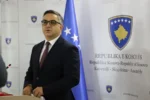
Rada Trajković has raised serious concerns about the future of Serbs in Kosovo, claiming that recent political developments are increasing uncertainty over their status, rights, and long-term survival.
Speaking in a televised interview, Trajković argued that agreements reached in Ohrid effectively transferred responsibility for Kosovo Serbs from Aleksandar Vučić to Albin Kurti, a move she described as “dangerous” given what she sees as a lack of support for a multiethnic framework.
She warned that without constructive and responsible backing from Belgrade, the Serbian community in Kosovo could face increasing challenges. Trajković was also critical of the role of the Serbian List, describing it as politically dependent on authorities in Serbia rather than representing local interests.
Addressing the implementation of Kosovo’s Law on Foreigners, she said the process reflects a broader integration trend, extending from individuals to institutions such as healthcare and education. However, she expressed concern over the collection of personal data from Serb employees, warning of potential misuse and calling for legal scrutiny by Serbia’s Constitutional Court.
Trajković also pointed to the activation of provisions aligned with the Ahtisaari Plan, suggesting that municipalities are gradually assuming responsibilities once expected to fall under the proposed Association of Serb-majority municipalities.
One of her strongest warnings focused on education, arguing that pressure on Serbian institutions — particularly universities — could have long-term consequences. “Without a university, there is no survival,” she said, emphasizing the importance of education for maintaining community identity and stability.
She further compared current developments to historical periods of displacement, suggesting that administrative measures risk reinforcing perceptions of exclusion among Kosovo Serbs. Trajković concluded that the future of the community depends on preserving institutional presence, supporting youth, and ensuring that political solutions do not undermine their identity or rights.