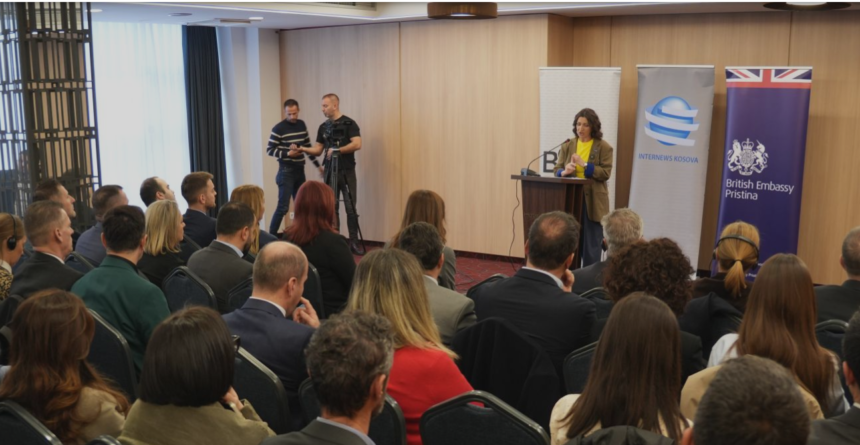
BIRN and Internews Kosova have released a report titled “Mapping Disinformation: Russian and Serbian Narratives in the Media and on Social Networks in Kosovo,” detailing the spread of Russian propaganda in Kosovo through disinformation campaigns.
The report analysed over 1,300 articles produced by four Kremlin-controlled media outlets between September 2025 and February 2026, as well as tens of thousands of links shared by local online platforms and social media networks. In total, 2,361 articles were selected for detailed analysis.
Jeta Xharra, BIRN Kosovo’s executive director, explained that the project aims to map how disinformation is distributed in Kosovo. The findings were complemented by BIRN’s documentaries, televised debates, training programmes for journalists, judges, and prosecutors, fellowships, and awards for journalistic work, reaching more than 10 million followers on social media.
UK Ambassador to Kosovo, Jonathan Hargreaves, warned that disinformation is becoming increasingly difficult to detect due to AI-generated content, noting that nearly 40% of the content studied included AI deepfakes.
Albulena Haxhiu, Speaker of the Assembly of Kosovo, emphasized that the traditional information architecture has eroded, with the lines between news, interpretation, and manipulation increasingly blurred.
Kreshnik Gashi, chief editor of Kallxo.com and report researcher, explained that a large portion of disinformation reaching Kosovo originates from Russian state-linked outlets such as Sputnik and Russia Today, which operate with an estimated budget of 400 million euros. These outlets produce an average of 7.3 articles about Kosovo daily, with the intent to disinform and provoke tensions, particularly along ethnic and religious lines.
The report highlights a dual strategy of Russian influence: official state media and alternative proxy platforms, such as Project Pravda, often using AI-generated translations and distributing content through messaging apps like Telegram. Minor incidents are frequently reframed as ethnically or religiously motivated attacks, fueling distrust and intolerance.
The study also found Kosovo’s media sector vulnerable due to financial constraints and limited resources for on-site reporting. Legal analysis revealed gaps in transparency, insufficient regulation of online media, and a lack of alignment with EU directives, including the Audiovisual Media Services Directive (AVMSD) and the EU AI Act.
Labinot Leposhtica, BIRN legal advisor, stressed the importance of transparency in media financing, ownership, and advertising to protect information integrity, noting that failure to align with EU standards could worsen the disinformation threat.