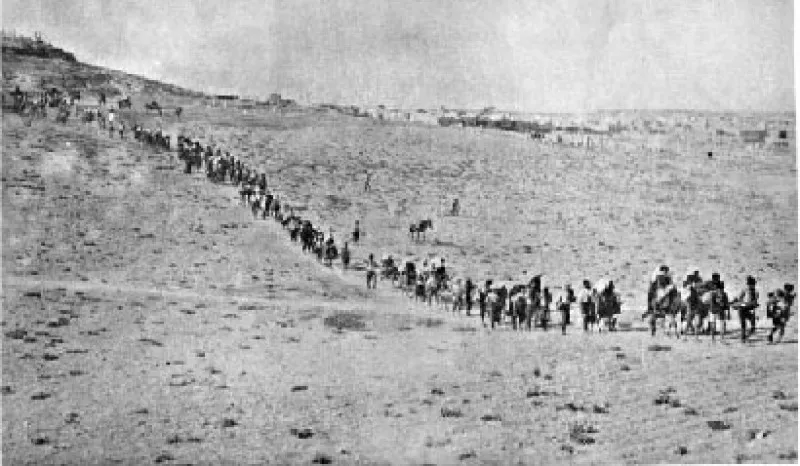
March 30, 2026 marks 81 years since the Tivar Massacre, one of the most brutal acts committed against Albanians during and immediately after World War II.
Following the end of the war in Kosovo, the Albanian population, forcibly incorporated into Yugoslavia, hoped for peace, freedom, and reunion with their motherland. Instead, they faced systematic massacres, deportations, and repression carried out by the new Yugoslav regime under Serbian, Montenegrin, and Macedonian command.
In early 1945, tens of thousands of Albanian recruits from Kosovo and parts of Macedonia were forcibly mobilized under the guise of joining the Yugoslav National Liberation Army. Many were sent to frontlines in Dalmatia, Srem, and other parts of Yugoslavia. However, instead of fighting, they were subjected to brutal treatment, deprived of food and water, and hundreds were killed along the way.
The Tivar Massacre occurred on April 1, 1945, where over 4,000 disarmed Albanian recruits were executed. Similar atrocities followed in Ragusa (Dubrovnik), where 1,300 were killed with poison gas on April 18, and in Trogir, where at least 29 recruits were drowned during transport by ship. The exact number of Albanian recruits killed along the route remains unknown.
These events reflected a continuation of pre-war policies of ethnic oppression and systematic violence. Albanian communities were targeted through military administration, forced mobilization, mass executions, and repression of intellectuals and local leaders. Many were also deported to Turkey or used as “cannon fodder” in military operations outside Kosovo.
Historians and witnesses describe these killings as unprecedented in scale and brutality, a dark chapter in the history of Albanian persecution in the Balkans. The Tivar Massacre, along with similar atrocities, serves as a stark reminder of the consequences of ethnic nationalism and the human cost of war.