The European Union is considering the use of frozen Russian assets as an alternative source of funding for Ukraine if Hungary continues to block a proposed €90 billion loan, EU High Representative Kaja Kallas said amid ongoing political deadlock.
Hungarian Prime Minister Viktor Orbán has vetoed the financial package, citing an unrelated dispute over the Druzhba oil pipeline, which has been non-operational since late January. His stance has also become a central theme in his re-election campaign ahead of the April 12 elections.
Kallas emphasized that the idea of using frozen Russian assets remains a viable option.
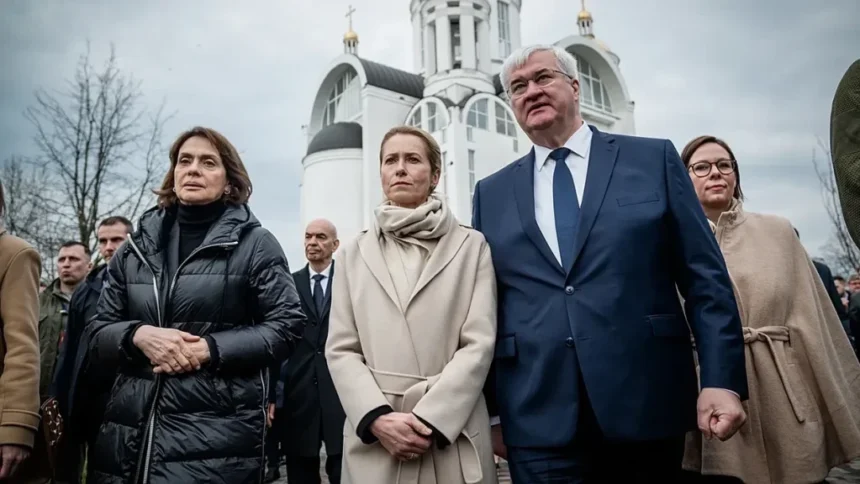
“The loan we are currently working on was actually Plan B. Plan A was the use of frozen assets,” she said during a visit to Kyiv marking the anniversary of the Bucha massacre. “If Plan B fails, we must return to Plan A. Ukraine must receive the funding it needs to resist Russian aggression.”
Standing alongside her, Ukrainian Foreign Minister Andrii Sybiha reiterated that frozen Russian assets “remain on the table” until Russia pays full reparations.
Divisions Within the EU
The European Commission previously proposed converting approximately €210 billion in frozen Russian central bank assets into an interest-free loan facility to support Ukraine through 2026 and 2027.
The plan received strong backing from countries such as Germany, Poland, and the Nordic and Baltic states. However, several member states—including Belgium, France, Italy, Malta, and Bulgaria—raised concerns over legal risks, financial implications, and potential damage to the eurozone’s credibility.
Belgium, which holds a significant portion of the frozen assets, has been particularly cautious, warning of possible legal and reputational consequences.
Due to these divisions, EU leaders agreed in December to pursue a €90 billion joint loan instead.
Hungary’s Veto and Growing Frustration
The loan was close to final approval in February when Orbán unexpectedly vetoed the agreement. He demanded the immediate restoration of oil supplies through the Druzhba pipeline as a non-negotiable condition.
“Without oil, there will be no money,” Orbán stated earlier this month.
His position has frustrated other EU member states, which argue that Hungary is undermining a previously agreed deal and violating principles of cooperation within the bloc.
The European Commission has offered to facilitate inspections of the pipeline and fund repairs, but progress has been delayed due to technical and security concerns.
Urgency Ahead of Funding Deadline
With Ukraine’s financial needs becoming increasingly urgent, EU officials are under pressure to find a solution before external funding begins to run out in May.
Despite ongoing discussions, revisiting the frozen assets proposal remains politically sensitive, with some leaders warning that it could set a risky precedent.
Nevertheless, EU officials continue to stress that securing financial support for Ukraine remains a top priority as the war with Russia continues.