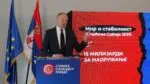
Predrag Petrović, Director of Research at the Belgrade Center for Security Policy, has linked the recent explosives case in Kanjiža to broader political dynamics between Serbia and Hungary, describing it as an “operation to save Orban’s regime.”
Speaking on N1 Direktno, Petrović said that the discovery of explosives near Kanjiža on Sunday reveals close ties between the autocratic governments of Aleksandar Vučić in Serbia and Viktor Orbán in Hungary. “These are two autocratic systems that cooperate, learn from each other, and assist each other when necessary. Currently, such assistance appears critical because Orbán faces significant political challenges ahead of upcoming elections,” Petrović explained.
He further emphasized that both regimes are implicated in corruption scandals and that political power in Budapest and Belgrade carries legal risks. “Vučić’s support for a declining regime cannot serve Serbia’s national interests, but it clearly benefits those loyal to his rule domestically,” Petrović added.
Petrović highlighted that the operation was poorly executed and politically transparent. “Orban’s messaging to his voters differs from what the Belgrade regime presents domestically. Vučić has incentives to support Orbán, sending signals to Serbian voters in anticipation of future elections,” he said.
Regarding jurisdiction, Petrović stressed that the Security Intelligence Agency (BIA) and police are responsible for such cases, not the Military Security Agency (VBA). He explained that VBA authority is limited to members of the Serbian Armed Forces and Ministry of Defense employees. “Even if civilians act against the military, VBA must cooperate with BIA and police. VBA cannot independently investigate such operations,” he said.
Petrović concluded by noting the importance of discipline and confidentiality in operations of this type, which, he argued, were not fully respected in the Kanjiža case.