France is striving to position itself as a leading security actor in Europe, advancing initiatives ranging from nuclear deterrence to military deployments and support for allies. However, experts caution that beneath ambitious rhetoric lie real limitations that could affect Paris’ ability to meet expectations.
Recent analyses indicate that France has intensified its role in European defense debates, offering independent nuclear deterrence, discussing troop deployments to Ukraine, and increasing its naval presence in strategic regions such as the Middle East. These moves come amid growing doubts over the reliability of the United States as Europe’s primary security guarantor.
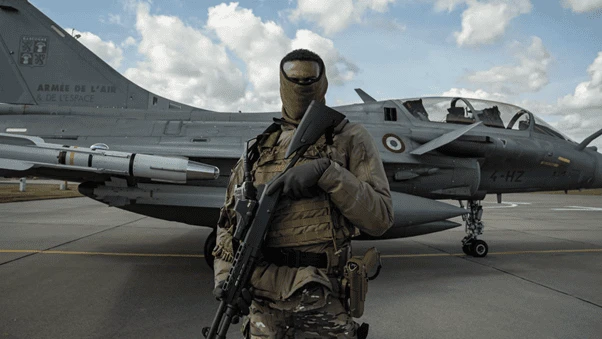
France leverages significant advantages, including sovereign nuclear deterrence, a robust defense industry, and armed forces experienced in international operations. Its fleet of Rafale fighter jets and advanced space-based intelligence capabilities make it a valuable partner for European states. The French Navy is considered among the continent’s most capable, able to project power and respond rapidly to crises, while the domestic defense industry supplies both national forces and key European allies.
Yet, despite these strengths, experts note structural limitations. Parliamentary reports have highlighted shortages of personnel, reserves, and munitions, describing the French military as a “bonsai army”—highly capable in quality but constrained in scale. Current stockpiles would last only a few weeks in a high-intensity conflict, and industrial production rates may not sustain a prolonged war effort.
In the nuclear domain, France relies solely on strategic weapons and lacks tactical options, limiting flexibility in scenarios of gradual escalation. Beyond military capacity, political will is a critical factor. President Emmanuel Macron has signaled readiness to increase France’s role in European defense, but domestic political developments and upcoming elections could alter foreign policy priorities. Rising support for extreme political movements and internal economic and social challenges add uncertainty to Paris’ long-term commitments. Public opinion broadly favors rearmament but remains cautious regarding direct involvement in conflicts.
Analysts conclude that France can provide meaningful support to European allies, particularly in intelligence, air power, and nuclear deterrence, but it cannot fully replace the U.S. role in guaranteeing continental security. European states are advised to plan with an understanding of France’s limited capacity while working closely with Paris to enhance the likelihood of stronger engagement in crises.
In summary, France remains a key actor in Europe’s security architecture, but its capabilities and political will are not unlimited.