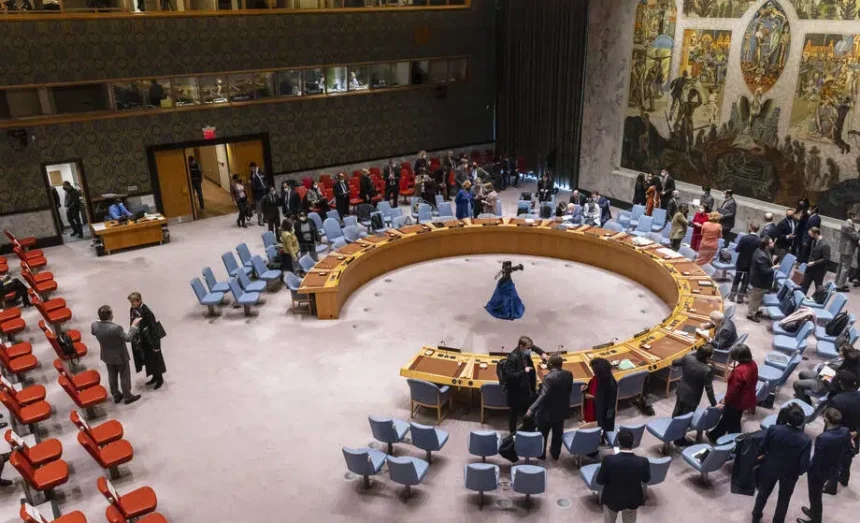
On April 9, the UN Security Council (UNSC) will convene to discuss the work of the UN Mission in Kosovo (UNMIK) for the first time this year. Observers say these meetings have become largely ceremonial, with little impact on the ground, serving mostly media and diplomatic formalities.
The session will review the Secretary-General’s report on UNMIK and will be attended by permanent members—the US, Russia, UK, China, and France—alongside non-permanent members including Greece, Denmark, Bahrain, Colombia, DR Congo, Latvia, Liberia, and Somalia.
Key issues for Serbia include the implementation of the Law on Foreigners and its effects on Kosovo Serbs, while both sides may raise regional tensions in their statements. However, according to Serbia’s analysts substantive negotiations occur primarily under the European Union’s framework rather than through UN meetings.
Miloš Pavković, director of strategy at the Centre for European Policies, describes these sessions as protocol-driven, producing statements and exchanges without actionable follow-up.
In practice, the UNSC meeting is unlikely to produce significant outcomes, and observers suggest both Kosovo and Serbia focus on EU-mediated negotiations for real progress.