Serbian President Aleksandar Vučić continued consultations with political parties on Monday, focusing on potential early parliamentary elections and Serbia’s stance on the EU and international security issues.
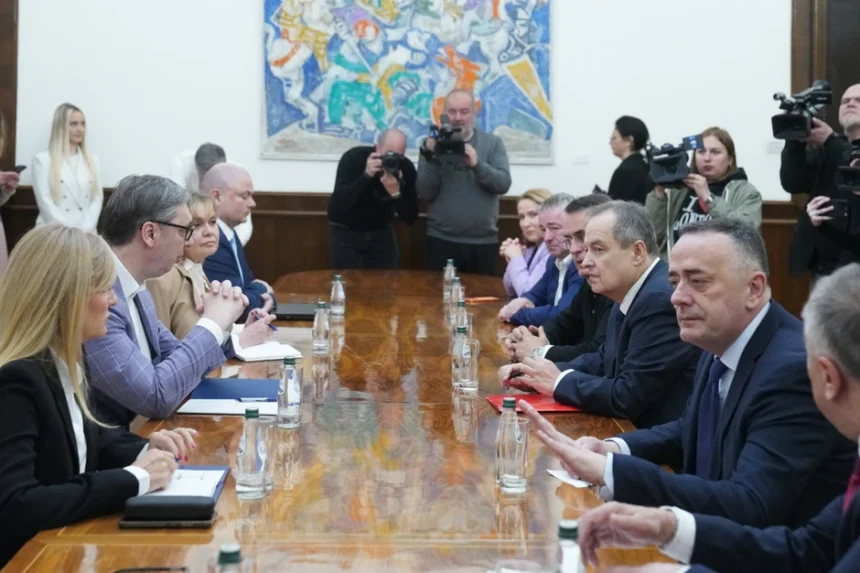
Vučić first met with representatives of the Socialist Party of Serbia (SPS) around 10 a.m., followed by a meeting with the Democratic Alliance of Croats in Vojvodina (DSHV) led by party president Tomislav Žigmanov. Around noon, consultations began with the Social Democratic Party of Serbia (SDPS), attended by party leader Rasim Ljajić and associates.
SPS leader Ivica Dačić, along with party officials Snežana Paunović, Dušan Bajatović, Đorđe Milićević, Novica Tončev, and Aleksandar Antić, emphasized that the party is always prepared for elections. Dačić stated that he prefers regular elections or that any early elections occur as close as possible to the regular schedule. He also noted alignment with the president on foreign policy and strategic goals, stressing that SPS remains “indestructible” and committed to long-term cooperation with the Serbian Progressive Party (SNS).
Dačić highlighted that elections should follow constitutional and legal deadlines, while the government continues to address strategic and foreign policy challenges, including navigating international economic and security pressures.
Tomislav Žigmanov of DSHV said his party will respect any election decisions and stressed the importance of resolving the issue of elections for the benefit of citizens, social stability, and democratic institutions. He reaffirmed the party’s commitment to political participation and advocacy for the Croatian community in Serbia.
Vučić began party consultations last Friday, meeting with the Movement of Socialists, the Alliance of Vojvodina Hungarians, and the Party of Justice and Reconciliation. He has stated that these consultations aim to ensure Serbia takes responsible decisions in a challenging international environment, giving political parties an opportunity to present their views and hear updates on global developments.