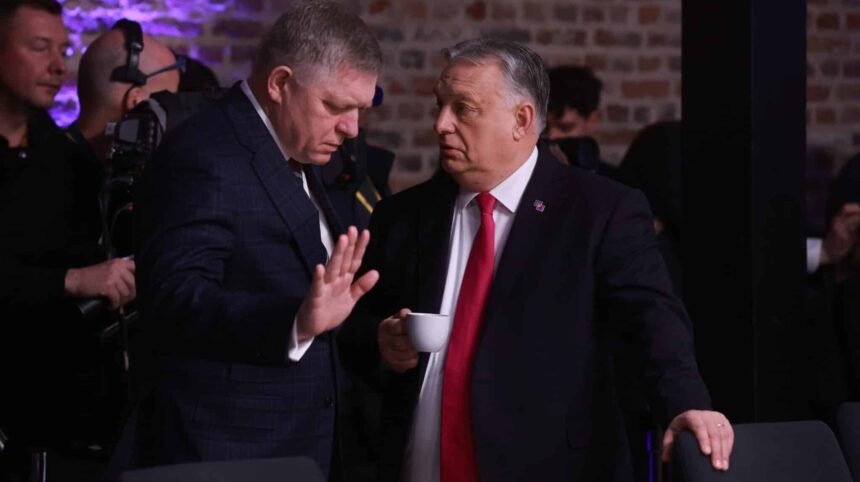
Slovak Prime Minister Robert Fico has aligned with Hungarian Prime Minister Viktor Orban in blocking EU support for Ukraine, a move that has sparked growing concern about Slovakia’s position within the bloc. At a European Council meeting in March, Orban vetoed a €90 billion aid package for Ukraine, citing disputes over the Druzhba oil pipeline. Fico, his sole EU ally, backed him, raising accusations of “blackmail” and disloyalty from other EU leaders.
The dispute ostensibly centers on the pipeline, which carries Russian oil via Ukraine to Hungary and Slovakia. Both leaders have blamed Ukraine for delays in repairs following a reported Russian drone strike. The political theatre intensified with dramatic public warnings from Orban and heightened rhetoric around alleged threats to Hungary.
Fico’s support for Orban serves multiple purposes. Analysts suggest he is using foreign policy disputes to distract from domestic issues such as economic stagnation, corruption, and a fractious coalition government. By challenging EU policy and echoing Russian narratives, Fico appeals to a segment of the electorate that is skeptical of the EU and liberal democracy.
Experts also warn that Fico’s actions risk long-term consequences for Slovakia. By blocking EU initiatives, Slovakia could lose influence in EU decision-making and face tighter scrutiny on funding, potentially limiting access to crucial financial support. Some analysts even warn Slovakia could face a “Greek scenario,” with economic vulnerability compounded by deteriorating relations with Brussels.
Fico’s strategy may yield short-term political gains at home, particularly among voters sympathetic to Russia or critical of the EU. However, the move leaves Slovakia isolated and could undermine its long-term economic and geopolitical interests, especially if Orban loses his April 12 election and the EU pivots toward a more cooperative Hungary.
Ultimately, analysts argue that Slovakia’s backing of Hungary in its confrontation with the EU and Ukraine risks significant reputational damage and threatens its economic security within the bloc.