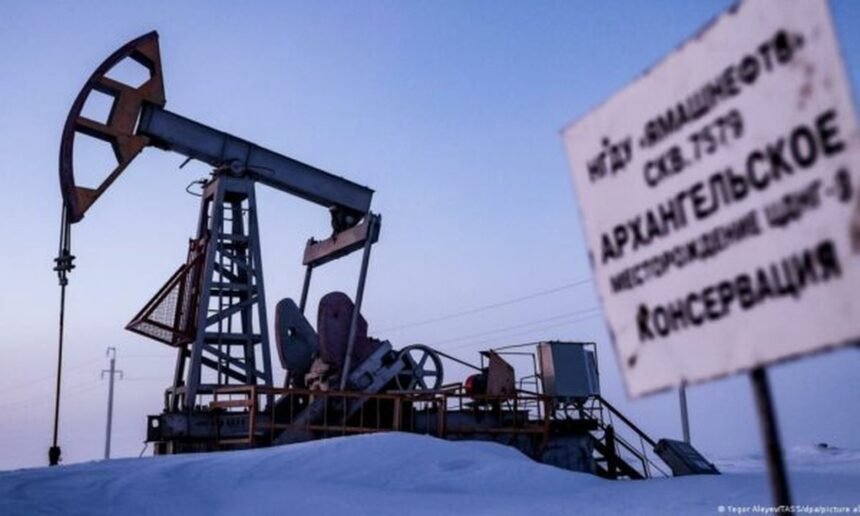
The closure of the Strait of Hormuz has driven up prices of oil, gas, and fertilizers, generating billions of dollars in additional revenue for Russia.
The de facto shutdown of the Strait is providing Russia with more than €10 billion per month in extra income from exports of oil, gas, and fertilizers, according to estimates by the German-Russian Chamber of Foreign Trade. “In this way, Russia is the biggest beneficiary of the war in the Middle East,” said the chamber’s chairman, Matthias Schepp, in a statement to the DPA news agency.
Russia is benefiting from rising global commodity prices while continuing to export through alternative routes. All of this could bring the country “significant windfall revenues,” Schepp added.
Oil prices surge – Russia profits
The impact of higher oil prices is particularly significant. The price of Brent crude oil exceeded $111 per barrel at the beginning of the week—nearly $40 higher than before the conflict.
This is crucial for Russia’s budget, which heavily depends on oil and gas revenues. Before the conflict involving Iran, prices had dropped to around $59 per barrel, contributing to a budget deficit.
At a price of $100 per barrel, Russia is expected to generate tens of billions in additional revenue, the chamber forecasts. From oil and gas alone, at current price levels, additional annual revenues of around $50 billion are possible.
The chamber also expects increased earnings from fertilizer exports, with a mid-range scenario projecting up to €8.9 billion more.
Financing the war
The increase in export revenues is also influencing the financing of the war in Ukraine. The German-Russian Chamber of Foreign Trade emphasized that Russia uses revenue from raw materials to fund its offensive war.
In Moscow, there are hopes that oil prices could rise as high as $200 per barrel. In that case, revenues could reach $350.4 billion—approximately $247 billion more than initially budgeted.
Despite sanctions imposed on Russia over the war in Ukraine, many countries have reduced imports of Russian raw materials, but trade continues through alternative routes and partners.