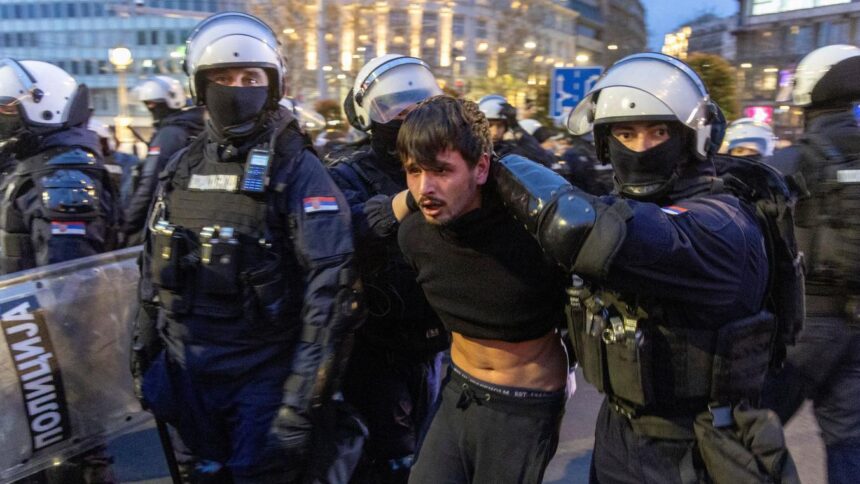
Amnesty International’s latest annual report paints a deeply concerning picture of the human rights situation in the Balkans, with particular attention given to developments in Serbia and Republika Srpska.
In Serbia, the report documents a climate marked by intimidation, harassment, and pressure against journalists, protesters, and civil society organizations. According to Amnesty, authorities responded harshly to widespread public discontent, including protests linked to corruption and the tragic collapse of a railway station canopy in Novi Sad that killed 16 people and seriously injured another person.
The report states that during 2025, police detained hundreds of protesters, while more than 160 cases of intimidation and physical attacks were recorded. It also raises concerns over the alleged use of illegal surveillance tools and spyware against activists and journalists, contributing to an atmosphere of fear and restricted civic space.
Amnesty further notes that Serbia’s institutions failed to make progress in ensuring accountability in war crimes cases, while judicial cooperation with neighboring countries in the region remained obstructed. The report also highlights allegations that Serbia exported large quantities of ammunition to conflict zones, raising questions about compliance with international obligations.
In Republika Srpska, Amnesty International warns of persistent political instability and an environment where discrimination and denial of past atrocities continue. The report points to ongoing glorification of convicted war criminals and continued denial of genocide, alongside systemic discrimination affecting Roma communities and other non-constituent peoples.
Civil society actors and independent journalists in Republika Srpska are described as facing sustained verbal threats, online harassment, and smear campaigns, contributing to an increasingly hostile environment for free expression.
Overall, the report underscores a pattern of shrinking civic space, weak accountability mechanisms, and continued pressure on media and activists in both Serbia and Republika Srpska, raising serious concerns about the state of democratic freedoms and human rights protections in the region.