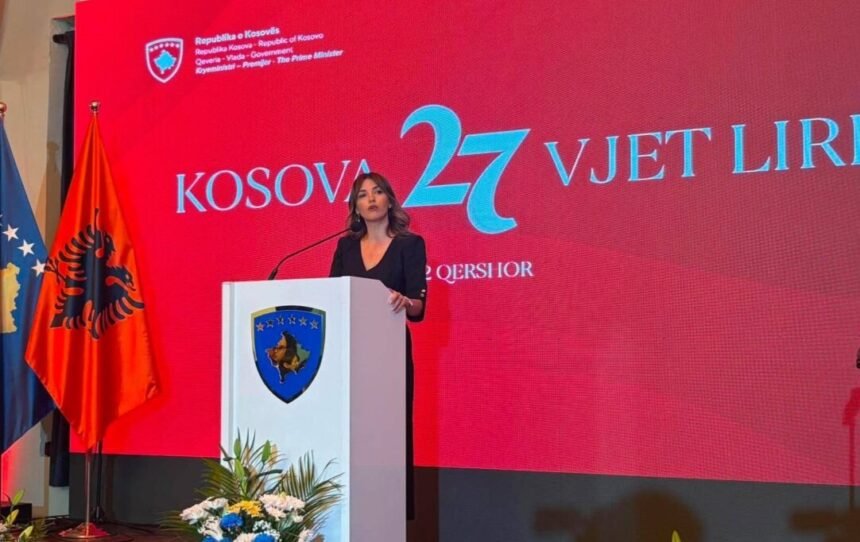
Top political leaders from Kosovo and Albania gathered at a state reception hosted by the government today to celebrate June 12, 1999, the historic day NATO peacekeeping troops entered Kosovo, effectively ending decades of systemic oppression and Belgrade’s wartime campaign.
The state gala served as a platform to honor the structural foundations of Kosovo’s independence, tracking its path from early political underground cells to the armed struggle of the Kosovo Liberation Army (KLA) and the eventual Western military intervention.
1. The Dual Realities of June 1999: Utter Joy and Profound Grief
In her keynote address, Acting President Albulena Haxhiu vividly reconstructed the psychological weight of June 1999, describing it as an unprecedented moment where a nation’s absolute triumph merged with collective trauma.
The Structural Evolution of Kosovo's Resistance Movement

 [ 1960s–1980s: THE UNDERGROUND CELL ] ──► IDEOLOGICAL FOUNDATION
 • Spearheaded by dissidents like Adem Demaçi (who endured 28 years in prison)
   and ignited by the massive student-led demonstrations of 1981.

 [ 1990s: THE PARALLEL STATE ] ──► INSTITUTIONAL DEFIANCE
 • The peaceful, civil resistance movement engineered by Ibrahim Rugova,
   building alternative health, tax, and educational institutions.

 [ 1998–1999: THE MILITARY INSURGENCY ] ──► DECISIVE FREEDOM
 • The armed campaign of the Kosovo Liberation Army (KLA) coupled with
   NATO's strategic air campaign, forcing the permanent retreat of Serbian forces.
“Those who lived through that June remember how life changed instantly. Long columns of refugees who had been forced out months earlier were suddenly turning back toward their homes. People embraced in the streets, looking for lost relatives, starting life over from scratch among burned houses—but with their heads held high and with dignity.” — Albulena Haxhiu, Acting President of Kosovo
2. Albania’s Reflection: A Triumph Over Apartheid
Joining the commemorative event, Albanian President Bajram Begaj delivered a powerful address, framing June 12 as an eternal landmark in the historical memory of the entire Albanian nation.
Begaj categorized the 1999 liberation as a definitive triumph of “freedom over apartheid, hope over fear, and justice over genocidal wrongdoing.”
3. The Dark Shadow of the Hague Tribunals
While the state reception was celebratory, President Begaj directly addressed the contemporary geopolitical friction surrounding the legacy of the conflict. He explicitly focused on the ongoing trials of former KLA leaders at the Special Court in The Hague, branding the judicial process a severe historical burden.
The Geopolitical Assessment of the KLA Leadership Trials
┌────────────────────────────────────────────────────────────────────────┐
│                                                                        │
│  [ THE CONFLICT OF NARRATIVES ] ───────────────────────────────────┐   │
│  • State officials view the trials as an institutional rewriting of    │   │
│    the war's fundamental power dynamics.                               │   │
│                                                                        │   │
│  [ A HISTORIC INJUSTICE ] ─────────────────────────────────────────┤   │
│  • President Begaj labeled the process a "heavy historical injustice" │   │
│    targeting individuals who led a defensive, anti-apartheid war.     │   │
│                                                                        │   │
│  [ THE PRICE OF DIGNITY ] ─────────────────────────────────────────┘   │
│  • Leaders emphasize that the defendants are paying a personal price   │
│    to protect the clean, just, and liberating nature of the KLA.       │
│                                                                        │
└────────────────────────────────────────────────────────────────────────┘
The ceremony concluded with both heads of state paying formal homage to the supreme sacrifices of historic figures like KLA Legendary Commander Adem Jashari and the political visionary Adem Demaçi, reinforcing that the sovereignty Kosovars enjoy today is an unyielding debt to those who built the foundation of the state.