Kosovo’s acting President Albulena Haxhiu has called for an international response to Serbian President Aleksandar Vučić’s recent remarks about the possibility of changing the course of the Ibar River, describing the proposal as a serious concern for Kosovo’s water, energy and environmental security.
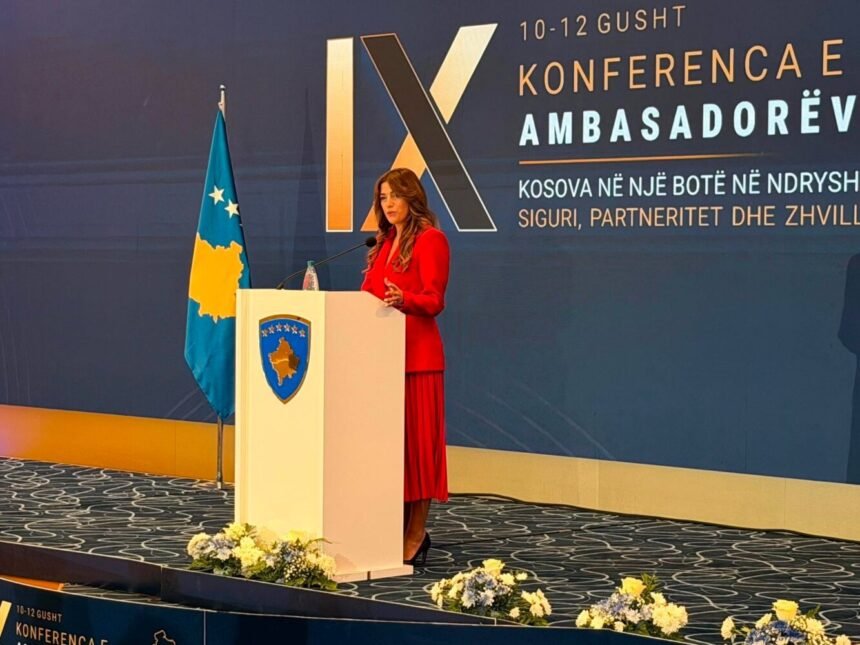
Speaking at the ninth Conference of Ambassadors of the Republic of Kosovo, Haxhiu urged Kosovo’s diplomats to inform the governments of the countries where they serve about the potential consequences of unilateral intervention in a transboundary water system.
She stressed the importance of the Ibar-Lepenac water system and Lake Ujman for Kosovo’s water supply, energy production, agriculture and the daily lives of hundreds of thousands of people.
“Unilateral intervention in transboundary waterways would have consequences far beyond a technical issue, as it would affect the water, energy, environmental and human security of our Republic,” Haxhiu said.
She accused Serbia of continuing what she described as a hegemonic policy toward Kosovo and said Vučić’s comments should be addressed with Kosovo’s international partners.
Haxhiu instructed Kosovo’s diplomatic representatives to raise the issue in the capitals where they are stationed and explain what she called the “nature and consequences” of the proposal.
“We must make it clear that using water resources as an instrument of pressure against Kosovo is unacceptable,” she said, arguing that proposals that revive what she described as “chauvinistic and destabilizing approaches” toward Kosovo require an appropriate international response.
Haxhiu also called on Kosovo’s international partners to ensure that any action that could endanger the country’s vital water resources is assessed in accordance with international principles governing transboundary waters, including equitable and reasonable use and the obligation to prevent significant cross-border harm.
The acting president also addressed Kosovo’s broader relations with Serbia, saying Belgrade must be held accountable for the 2023 Banjska attack, attacks against KFOR personnel, journalists and civilians, as well as the fate of people who remain missing from the 1998-1999 war.
“Serbia must be held accountable for the terrorist attack in Banjska, for attacks against KFOR members, journalists and other citizens, for handing over terrorist mastermind Milan Radoičić and others involved in this terrorist attack, as well as for clarifying the fate of more than 1,500 people who went missing in our country during the war,” Haxhiu said.
She argued that addressing these issues was essential for any genuine and sustainable normalization process between Kosovo and Serbia.
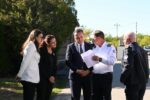
Haxhiu also referred to recent discoveries in Zubin Potok, where human remains believed to belong to victims of the 1998-1999 war were reportedly found at locations in Kalludër e Vogël and Jabuk.
She said Kosovo institutions were also working at a third suspected mass-grave site and called on Serbia to open its wartime archives.
“Our partners must know that even today, new evidence of war crimes is being found in Kosovo and that justice for the victims and their families is still waiting for answers,” Haxhiu said.
The acting president made the remarks during the ninth Conference of Ambassadors of the Republic of Kosovo, organized by Kosovo’s Ministry of Foreign Affairs and Diaspora.