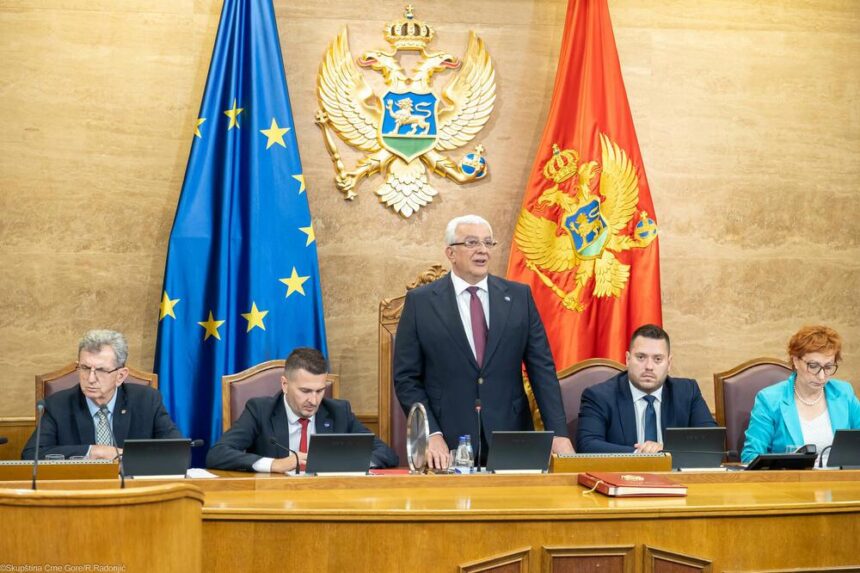
Montenegro is facing a new political crisis after the opposition launched an initiative to remove Parliament Speaker Andrija Mandić, with an extraordinary parliamentary session scheduled for September 24 to consider his dismissal.
The initiative has been backed by 38 opposition lawmakers, leaving the opposition three votes short of the 41 votes required to remove Mandić from office.
According to the opposition proposal, the main reason for seeking Mandić’s dismissal is his decision to publicly express condolences following the death of former Bosnian Serb military commander Ratko Mladić, who was convicted by the International Criminal Tribunal for the former Yugoslavia of genocide, crimes against humanity and war crimes.
Mandić, the leader of the pro-Serbian and pro-Russian New Serb Democracy party, has served as parliamentary speaker since October 2023. His election was part of the coalition agreement that paved the way for Prime Minister Milojko Spajić’s government.
The attempt to remove Mandić could have wider consequences for Montenegro’s governing coalition, which brings together political representatives from different ethnic and political communities, including Serbian, Bosniak and Albanian ministers.
The dispute over Mladić has already triggered a broader political confrontation. While the opposition is seeking Mandić’s removal over his public condolences, representatives of the Serbian community have called for Foreign Minister Ervin Ibrahimović to be dismissed over his statements condemning Mladić.
The confrontation places the government in a difficult position as it attempts to maintain its multiethnic coalition while pursuing Montenegro’s strategic goal of joining the European Union.
Montenegro is currently the leading EU candidate in the Western Balkans and has set an ambition of completing the accession process and becoming an EU member by 2028. Political instability within the governing coalition could complicate efforts to maintain momentum in the accession negotiations.
The September 24 parliamentary session could therefore become a major test for Spajić’s government. If Mandić loses the required support, the vote could trigger a broader renegotiation of the coalition and further deepen political tensions in Podgorica.