Croatia has launched an intensified diplomatic campaign within the European Union and NATO over Serbia’s recent actions, with the glorification of convicted war criminal Ratko Mladić becoming a central issue in Zagreb’s warnings about stability in the Western Balkans.
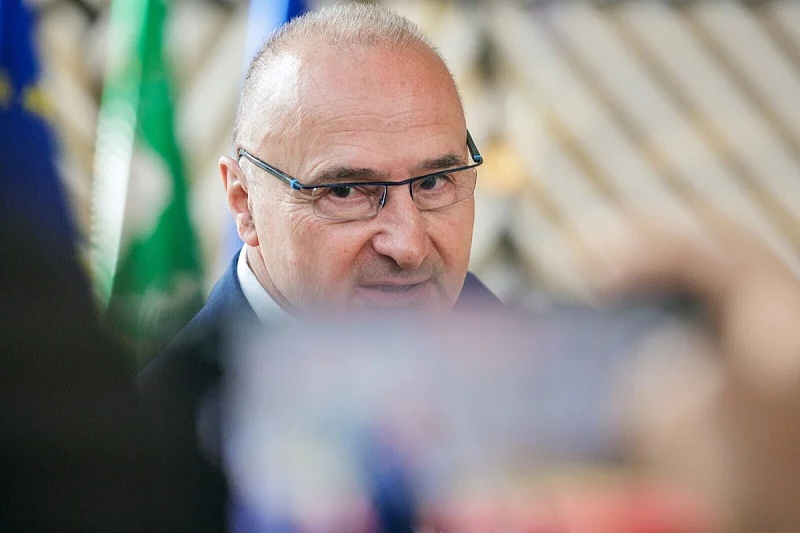
According to Croatian newspaper Jutarnji list, Croatian Foreign Minister Gordan Grlić Radman raised the issue with European counterparts during a working dinner in Riga on Wednesday, acting on instructions from Prime Minister Andrej Plenković.
Diplomatic sources cited by the newspaper said Grlić Radman warned his counterparts about the public glorification of Mladić during his funeral in Belgrade, where senior political, military and Serbian Orthodox Church figures paid tribute to the former Bosnian Serb military commander.
The Croatian minister reportedly discussed the issue with six European foreign ministers, with particular attention to partners from Northern Europe who have frequently taken a critical position toward Belgrade because of Serbia’s close relationship with Moscow and its refusal to join EU sanctions against Russia.
The dinner, hosted by Latvian Foreign Minister Baiba Braže, brought together the foreign ministers of Croatia, Finland, Ireland, Latvia, Hungary and Poland.
Alongside discussions on EU enlargement, Ukraine and Moldova’s European integration and Russian hybrid threats, Grlić Radman reportedly focused on the European perspective of the Western Balkans and the implications of Serbia’s policies for regional stability.
The Croatian foreign minister also used the meeting to emphasize Zagreb’s concerns regarding Bosnia and Herzegovina. He reiterated that the country’s stability and European future remain among Croatia’s key foreign-policy priorities.
Grlić Radman repeated Zagreb’s longstanding position on Bosnia and Herzegovina, emphasizing what Croatia describes as the need for the “full equality of the three constituent peoples,” legitimate political representation of Croats and reform of the country’s electoral legislation.
The meeting concluded with discussions on security challenges in the Middle East and what participants described as intensified Russian destabilizing activities. Croatia also reaffirmed its commitment to continued support for Ukraine and stronger cooperation within the EU and NATO.
Zagreb’s diplomatic push comes amid growing European scrutiny of Serbia following the public honoring of Mladić, who was convicted by the International Criminal Tribunal for the former Yugoslavia of genocide, crimes against humanity and war crimes.
For Croatia, the issue has become part of a broader argument that Serbia’s domestic political choices, its relationship with Russia and its approach to the legacy of the wars of the 1990s have wider implications for the security and political stability of the Western Balkans.