
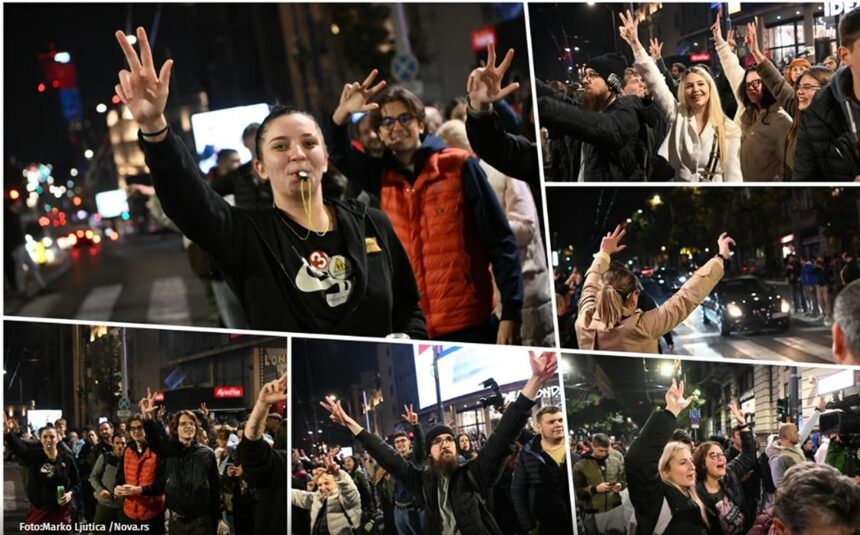
Gurakuç Kuçi, an external researcher at the Octopus Institute, believes that Aleksandar Vučić’s electoral defeat could pave the way for political change in Serbia. However, he stresses that Belgrade’s approach towards Kosovo and neighbouring countries must be assessed through concrete actions rather than political statements.
Kuçi has analysed recent political developments in Serbia and their potential impact on security in the Western Balkans, questioning whether a change of leadership in Belgrade could mark the end of the country’s policy of destabilisation.
In an analysis published on X, Kuçi emphasised that a political shift after more than a decade of Vučić’s dominance would have implications not only for Serbia but also for the wider region.
According to Kuçi, the student movement’s position on Kosovo does not differ fundamentally from Serbia’s traditional stance on Kosovo’s independence.
He suggested that avoiding sensitive foreign policy issues may have been a strategy to unite citizens around the fight against corruption, authoritarianism and state capture.
For this reason, Kuçi argued that the student movement should not automatically be equated with Vučić’s regime. At the same time, he cautioned against assuming that a change of government would, by itself, lead to a shift in Serbia’s policy towards Kosovo.
Kuçi said Vučić’s regime had used nationalism, tensions with Kosovo and threatening rhetoric as instruments of political power.
He also assessed that Vučić’s weakening or departure from office could create opportunities for Serbia to adopt a less confrontational approach towards its neighbours.
Nevertheless, he stressed that the real test of change would extend beyond domestic democratisation in Serbia. It would also depend on how Belgrade conducts its relations with other countries across the region.
Regarding Kosovo, Kuçi argued that political changes in Belgrade must be measured by concrete actions, rather than electoral promises or public statements.
He concluded that Vučić’s fall could mark the beginning of the end of a political model associated with destabilisation. However, only the policies pursued by Serbia’s future leadership will determine whether that model has genuinely come to an end.