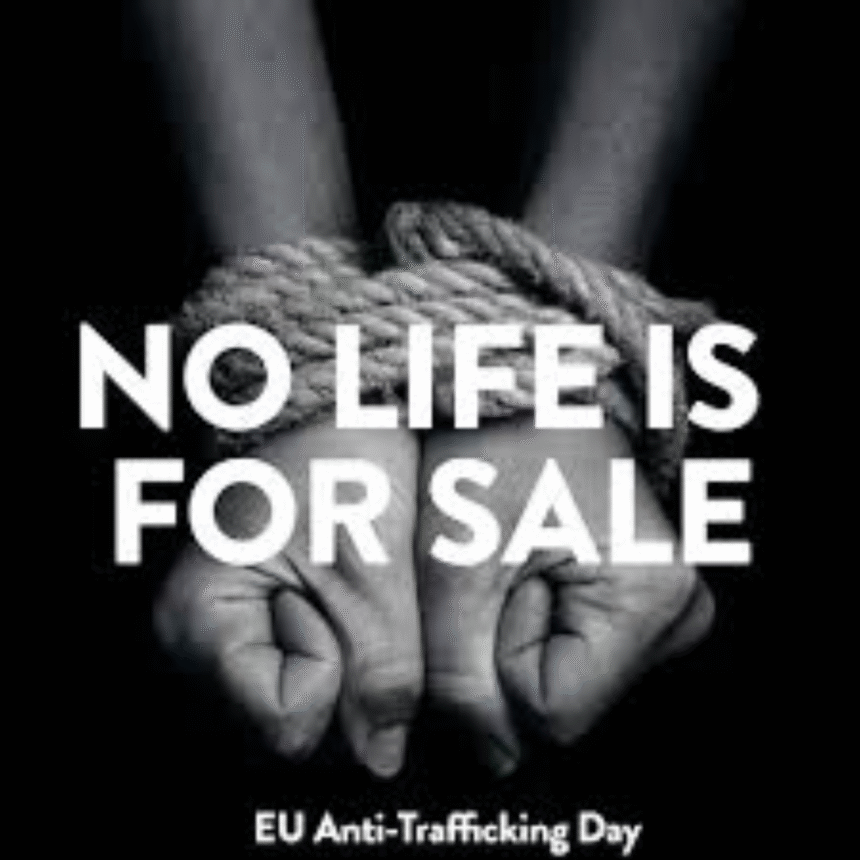
The European Day Against Human Trafficking serves as a reminder to policymakers, civil society, agencies, and institutions about the ongoing global crisis of human trafficking — a phenomenon that affects millions across the world. Each year, around 27 million people — women, men, and children — become victims of trafficking.
Human trafficking is defined as “the recruitment, transportation, transfer, harboring, or receipt of persons by means of threat, use of force, coercion, abduction, fraud, deception, abuse of power or vulnerability, or giving/receiving payments or benefits to achieve the consent of a person having control over another person, for the purpose of exploitation.”
Trafficking for forced criminality fuels corruption and organized crime, allowing criminals to profit from human suffering while victims face punishment and stigma.
To dismantle these networks, responses must focus on identifying victims and ensuring survivor-centered justice. Governments, civil society, and international actors must establish strong referral systems, provide reintegration support, and uphold the principle of non-punishment for victims.
Women and girls trafficked for sexual exploitation endure violence and abuse — including deprivation of liberty, and economic, physical, and sexual violence — leading to severe and sometimes life-threatening consequences.