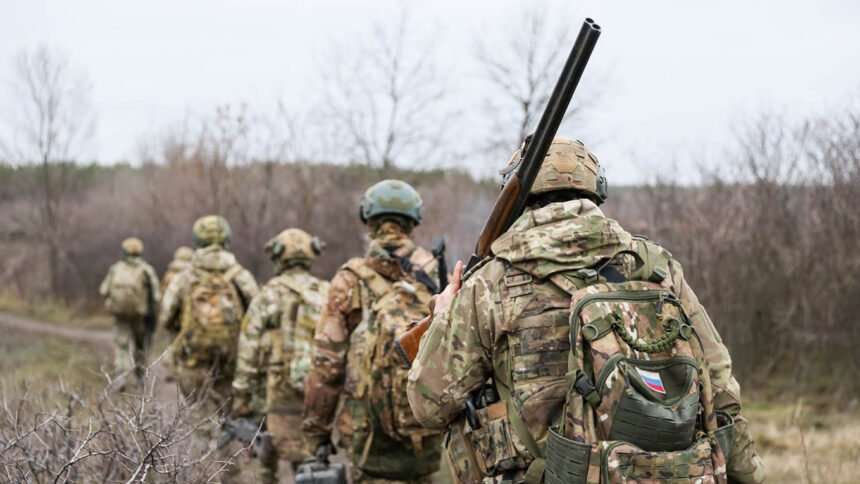
By the end of 2025, Russia’s war against Ukraine has become a prolonged conflict, with neither side achieving a decisive strategic breakthrough.
Despite more front-line shifts this year than in 2023 or 2024, Russian advances remained slow, limited, and extremely costly in both manpower and equipment. Moscow emphasized its battlefield achievements throughout the year, aiming to strengthen its position in U.S.-mediated peace talks and portray victory as inevitable.
In late November, Russian President Vladimir Putin warned that Ukrainian forces would have to withdraw from occupied territories, threatening military action otherwise. However, military analysts stress that progress on the ground has been uneven and tactical rather than strategic.
According to analysts, Russia captured nearly 5,000 square kilometers of Ukrainian territory in 2025. Key developments included:
- Kursk region: Ukrainian troops were pushed out in spring.
- Sumy region: Brief Russian advances stalled quickly.
- Eastern Ukraine: Russian forces nearly completed the capture of Pokrovsk and Myrnohrad after nearly two years of fighting, and by year-end claimed control over Huliaipole in Zaporizhzhia and Siversk in Donetsk.
The war has increasingly relied on small assault units and drone warfare rather than large armored offensives. These units infiltrate Ukrainian positions, exploit weaknesses, and gradually secure local advantages. Analysts at the Atlantic Council note that drone operations, especially fiber-optic drones resistant to electronic jamming, have become a key factor in Russian tactics.
Despite mobilizing its defense industry and replenishing forces with contract soldiers, Russia faces logistical challenges, relying on volunteer initiatives, pro-war bloggers, and private funding. Battlefield reports are often exaggerated, leading to costly operations aimed at “realizing” previously claimed territorial gains, as seen in Kupiansk.
Overall, analysts conclude that while Russia has adapted to modern warfare, the lack of manpower and inability to achieve a deep strategic breakthrough suggest the conflict will continue without a decisive victory in sight.
“Russia currently does not have enough forces for decisive offensives in any sector of the front,” said BBC military analyst Pavel Aksenov, noting that even potential breakthroughs would be insufficient to fundamentally change the course of the war.