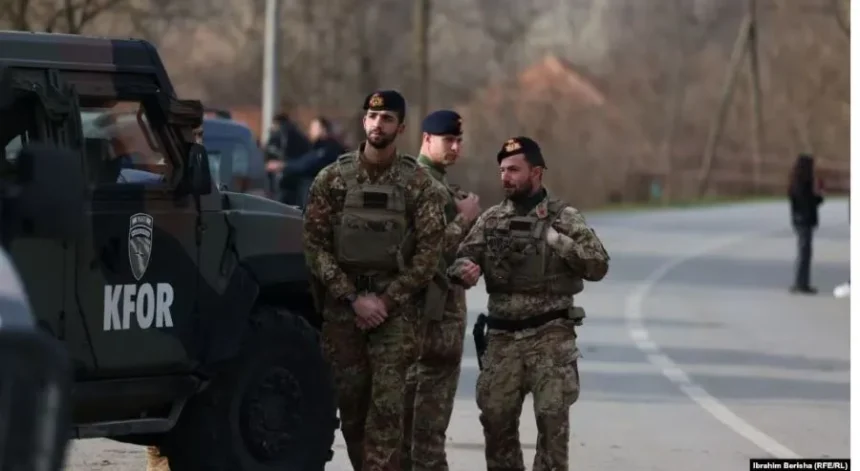
NATO announced plans to gradually adjust and optimize its Kosovo Force (KFOR) peacekeeping presence over the coming year, pointing to a steadily improving security environment.
The announcement, delivered by U.S. Air Force General Alexus G. Grynkewich, the Supreme Allied Commander Europe (SACEUR), arrives on the 27th anniversary of NATO’s initial military entry into Kosovo in 1999.
1. Security Milestones Leading to the Decision
The military alliance clarified that the decision follows strict intelligence-driven assessments of the ground situation. A stabilized security landscape has enabled NATO to wind down temporary emergency reinforcement protocols.
- End of Reserve Rotations: In January, NATO officially halted the continuous deployment of tactical reserve forces to KFOR, wrapping up more than two years of non-stop emergency rotations.
- The 2023 Surge Baseline: The planned reduction will primarily dial back the nearly 1,000 additional troops rushed to the region in 2023 following severe clashes and unjustified attacks against peacekeepers in Zvečan, which left 93 KFOR personnel injured.
- Reverting to Normal Standards: The drawdown will systematically bring KFOR’s total strength—which currently stands at roughly 4,600 troops—back toward pre-2023 operational levels.
2. Institutional Reactions: NATO vs. Prishtina
While NATO frames the transition as an “optimization” of resources, local political leadership focuses heavily on expanding sovereign defense pipelines.
Divergent Perspectives on Kosovo's Security Architecture

 [ NATO / SHAPE POSITION ]
 ┌────────────────────────────────────────────────────────────────────────┐
 │ Focuses on dynamic "optimization" rather than raw troop numbers.        │
 ├───────────────────────────────────┬────────────────────────────────────┤
 │ • Calibrated reductions tied directly to ground indicators.            │
 │ • Complete readiness to reverse the drawdown if stability wavers.       │
 │ • Direct insistence that long-term security relies on political tracks. │
 └────────────────────────────────────────────────────────────────────────┘

 [ KOSOVO GOVERNMENT POSITION ]
 ┌────────────────────────────────────────────────────────────────────────┐
 │ Focuses on boosting autonomous state security institutions.             │
 ├───────────────────────────────────┬────────────────────────────────────┤
 │ • Premier Albin Kurti highlights a "strong army and capable police."   │
 │ • Plans to deploy a new Gendarmerie branch shortly.                     │
 │ • Prioritizes direct legal extensions over reliance on foreign shields. │
 └────────────────────────────────────────────────────────────────────────┘
3. KFOR’s Evolving Role and Regional Strings
| Operational Mandate | Legal Backing / Constraints | Long-Term Strategic Status |
| Border Management | UN Security Council Resolution 1244. Primary handler of the administrative boundary line with Serbia. | Unchanged. Retains absolute security oversight along the border zone. |
| Northern Kosovo Operations | 2013 Brussels Agreement Letter. The Kosovo Security Force (KSF) cannot deploy north without SACEUR consent. | Strictly Enforced. The constraint remains fully active despite the KSF’s ongoing military transition. |
A senior spokesperson from the Supreme Headquarters Allied Powers Europe (SHAPE) re-emphasized that the strategic shifts will occur seamlessly alongside national rotational schedules between now and next year.
General Grynkewich firmly stated that the Western Balkans remains an area of paramount strategic importance to the alliance, ensuring that “NATO will not allow a security vacuum to emerge” as it continues to back the EU-facilitated dialogue between Belgrade and Prishtina.